The Marriage Record I Almost Missed
One genealogy mistake I see often is assuming the only marriage you found was the only marriage that existed.
A recent client case was a good reminder of why it is so important to keep looking for earlier marriages, especially in the 1800s. In this case, the man I was researching appeared as single in the 1880 census, and the earliest marriage record I initially located showed him marrying at age 28. That is certainly possible, but for that time period it was uncommon enough that it made me pause.
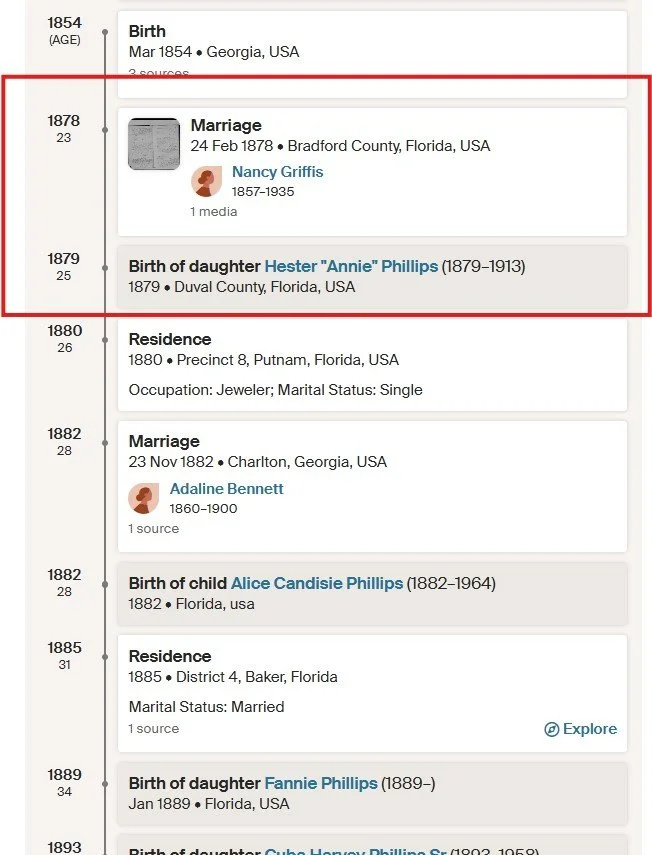
The bigger clue actually came from DNA matches. Several second cousin matches all had a woman named Hester “Annie” Phillips in their trees. The Phillips surname matched the family I was researching, and based on Hester’s age, I began to suspect that she could be an older daughter of this same man.
That changed the direction of the research completely.
After additional searching, I eventually found Hester and her mother Nancy living together on a census record by themselves. From there, I kept pushing backward and finally uncovered an earlier marriage record between the man and Nancy Griffis in 1878 (seen below - I had to use Gemini to transcribe it!).
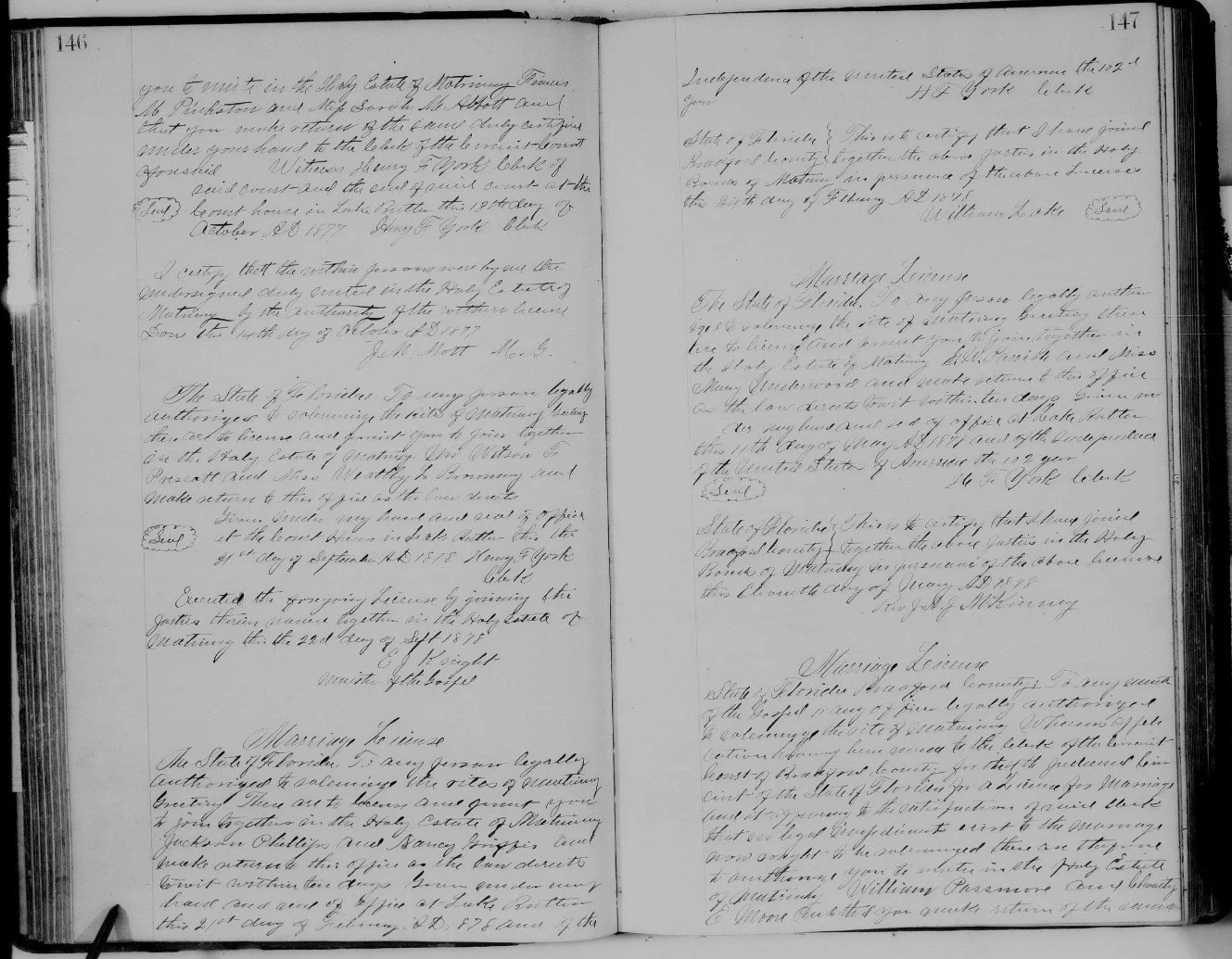
Suddenly the timeline made far more sense. Instead of a man marrying unusually late for the era, the records now showed an earlier marriage in his early twenties, a daughter born in 1879, and then a later remarriage after the apparent death or separation of the first wife. The DNA matches had essentially pointed toward an entire missing first family.
One of the easiest traps in genealogy is assuming the first record you find is the first event that happened. In the 1800s, remarriage was extremely common because of illness, childbirth deaths, accidents, separations, and generally shorter life expectancy. If something about the timeline feels off, it is often worth stepping back and asking whether there was an earlier spouse or family that has simply not surfaced yet in your research.
