2 Minute Reads
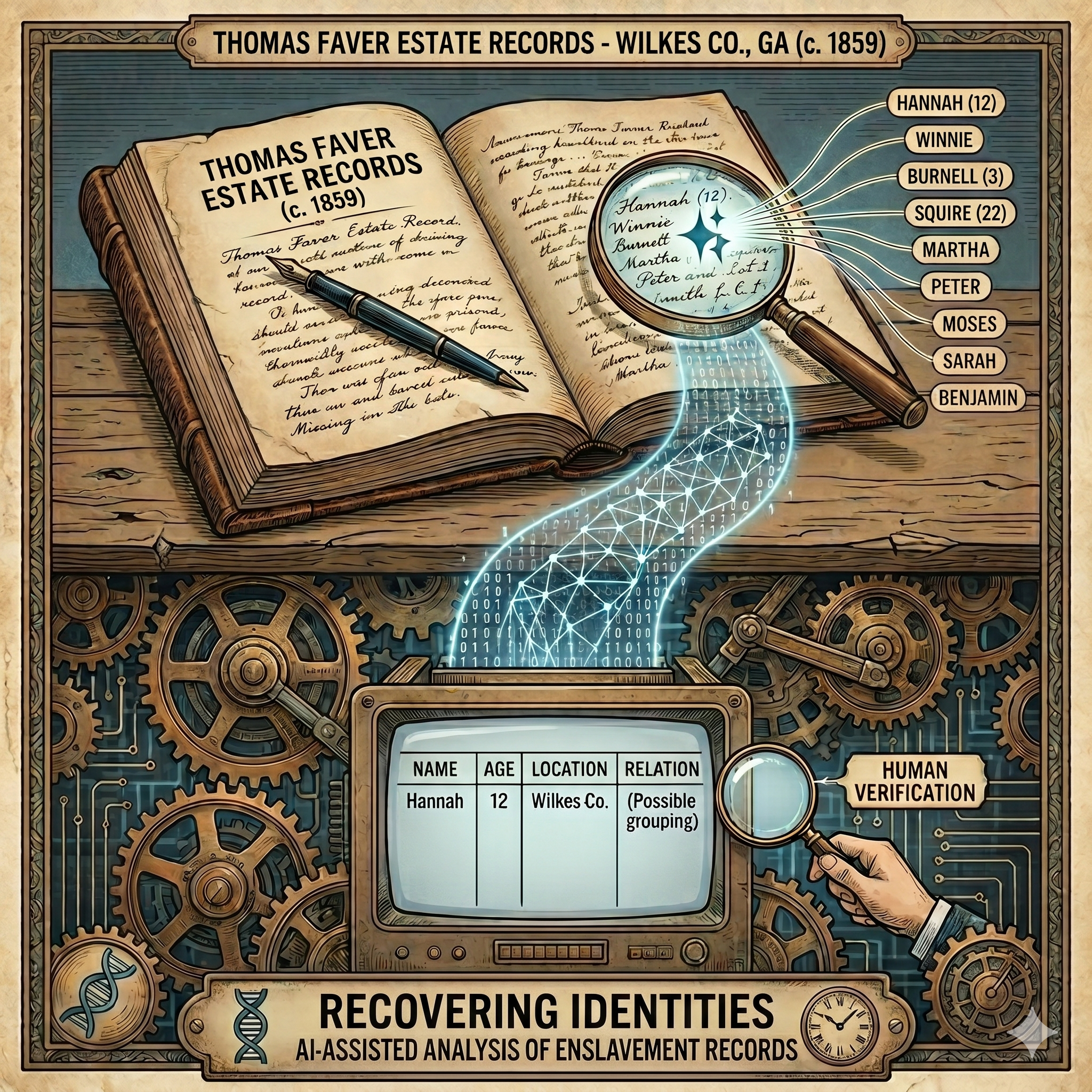
Using AI to Transcribe Records of Enslaved People
Old probate records can be difficult to read, especially when they involve faded handwriting, antiquated language, and the names of enslaved people recorded as property. In this case study, I used Gemini to help transcribe and organize five 1859 estate record pages from Wilkes County, Georgia, which named 108 enslaved individuals. AI helped turn a difficult document set into searchable data, but every name, relationship clue, and possible family grouping still required careful human review against the original record.
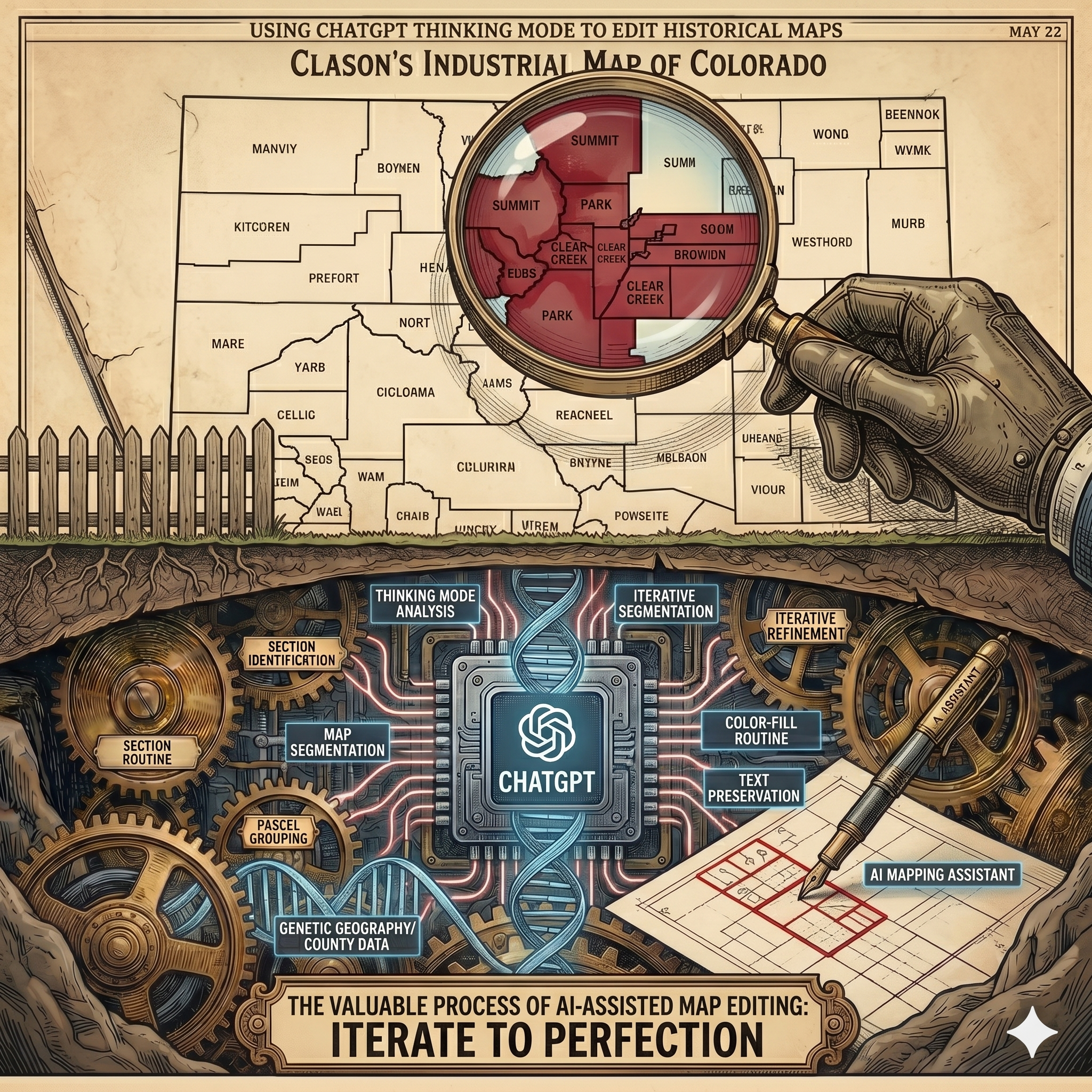
Using ChatGPT Thinking Mode to Edit Historical Maps
I show how I used ChatGPT’s paid thinking mode to help edit a public domain Colorado map for my book, The Solomon Gang: Outlaws by Any Name. Instead of manually tracing counties, I marked the area I wanted highlighted and asked ChatGPT to create a transparent overlay on the clean map. The process took several rounds of corrections, especially because my outlaw great-grandfather operated in different areas during different timeframes, but the result was a clearer visual way to show where the story happened.
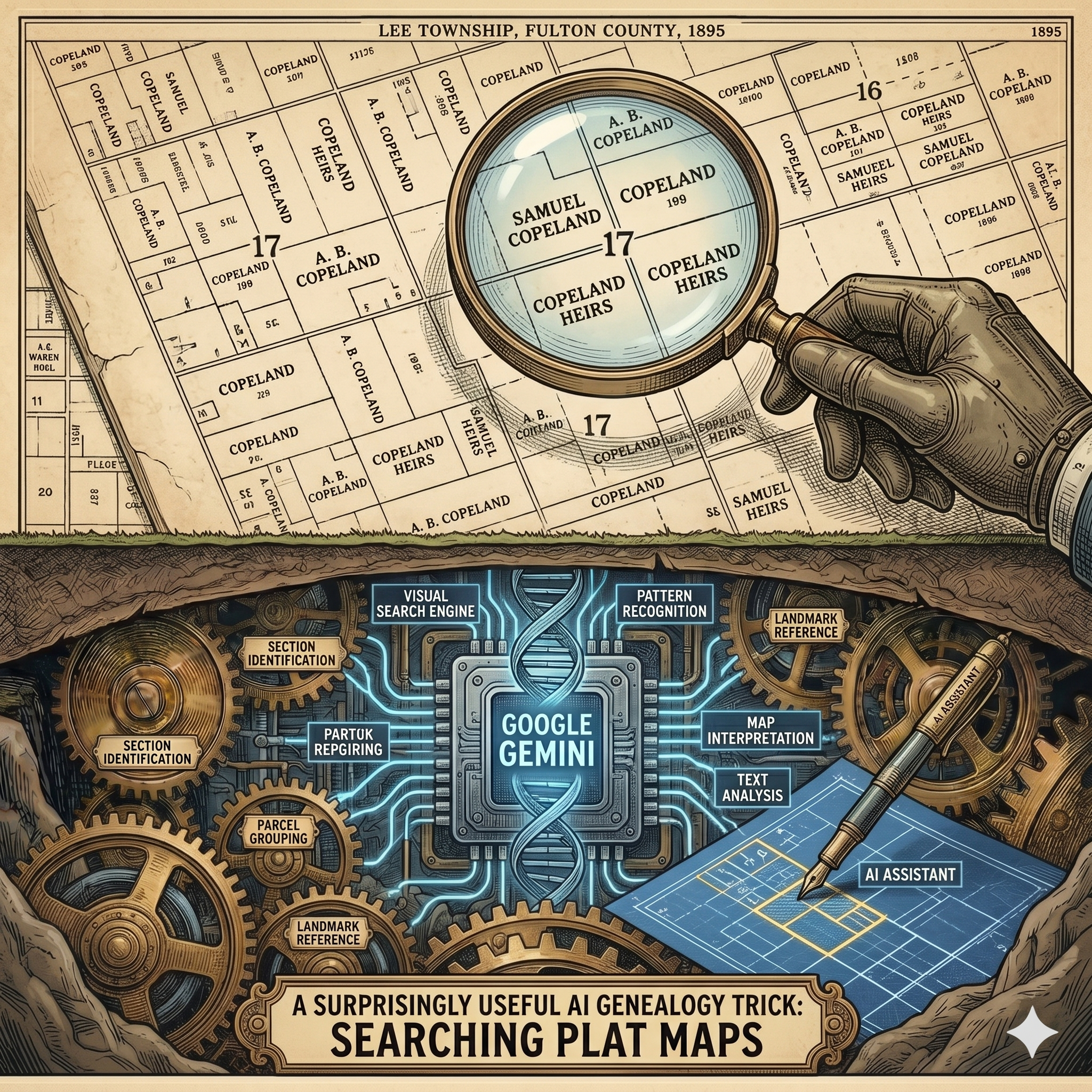
A Surprisingly Useful AI Genealogy Trick: Searching Plat Maps
AI genealogy tools are not just for writing and summarizing. One of the most practical uses is helping search difficult historical documents faster. In this post, I show how Google Gemini quickly located the surname “Copeland” on a dense historical plat map using nothing more than a simple question and an uploaded image. It is a great example of how AI can act as a visual research assistant for maps, land records, directories, and other challenging genealogical sources.
The Marriage Record I Almost Missed
A later marriage record can sometimes hide an entire earlier family. In this short case study, DNA matches pointed toward a missing daughter and eventually led to the discovery of an earlier marriage that completely changed the timeline. A reminder that when something feels off in your research, it is often worth searching for the marriages that happened first.
Why Linking Your DNA to Your Tree Matters
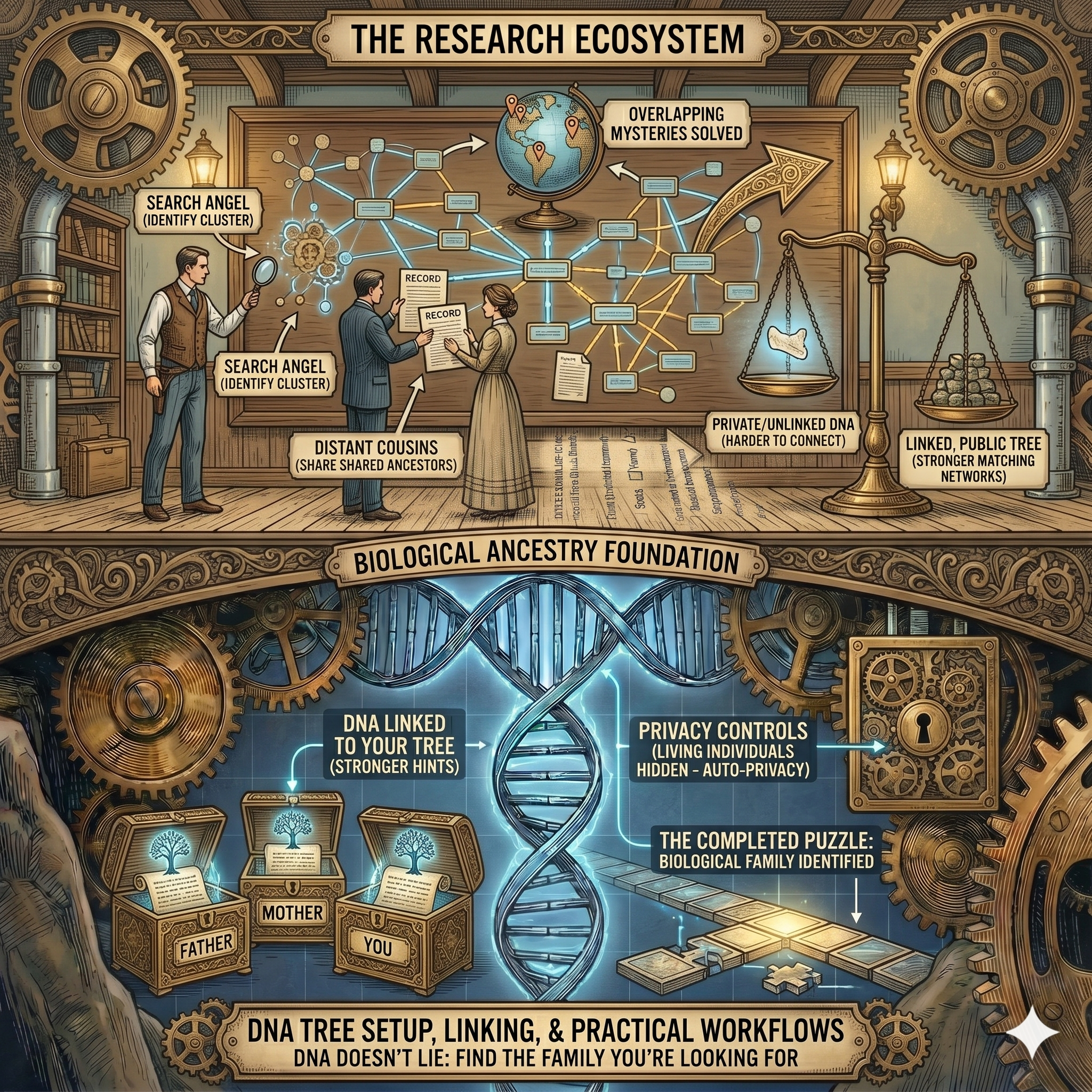
Many AncestryDNA users unknowingly limit their own discoveries by leaving their DNA unlinked to a family tree or by keeping their tree completely private. In this 2 minute read, I explain why linked public trees are so important for DNA matching, how other researchers and distant cousins often help solve family mysteries, and how simple settings changes can dramatically improve your chances of identifying biological family connections.
Small Ethnicity Regions in AncestryDNA: When They Don’t Mean What You Think
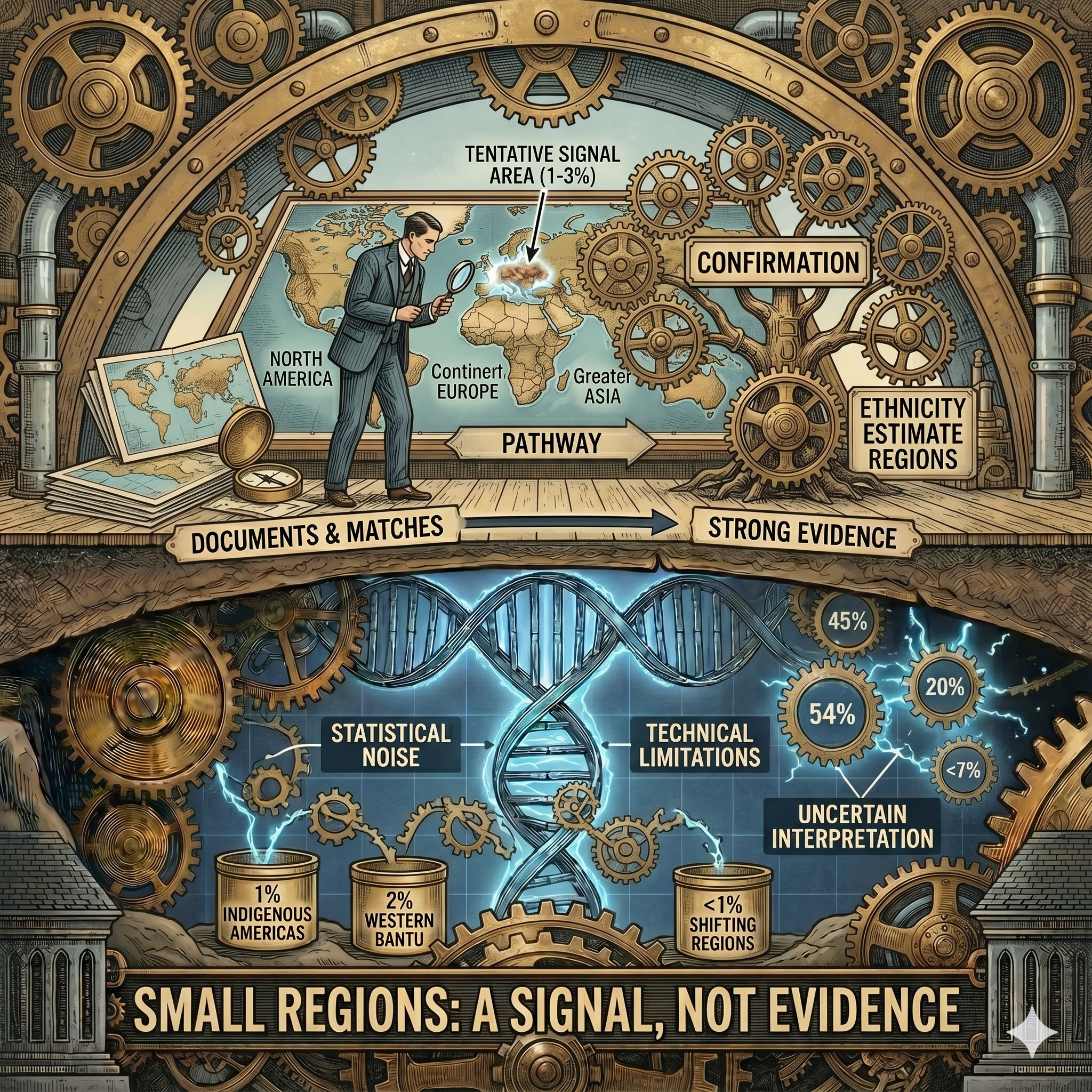
Your DNA results can feel incredibly precise, especially when you see small percentages tied to specific regions. But those 1–2% estimates often raise more questions than they answer. In this short read, I break down what those tiny percentages actually represent, how far back you would need to research to find a potential source, and why the answer is often much less clear than it seems. If you’ve ever wondered whether a small ethnicity result points to a real ancestor, this will help you interpret it correctly.
Using Genealogy Assistant (Genea) with Ancestry and AncestryDNA
Genealogy Assistant (Genea) is a browser extension that improves how you work inside Ancestry and AncestryDNA by reducing repetitive tasks and adding bulk tools for large-scale research. Its biggest advantage is in DNA workflows, where features like selecting entire pages of matches and grouping them in one step make it much faster to organize and analyze match clusters.
Two Small Clues AI Solves Fast (and Why That Matters)
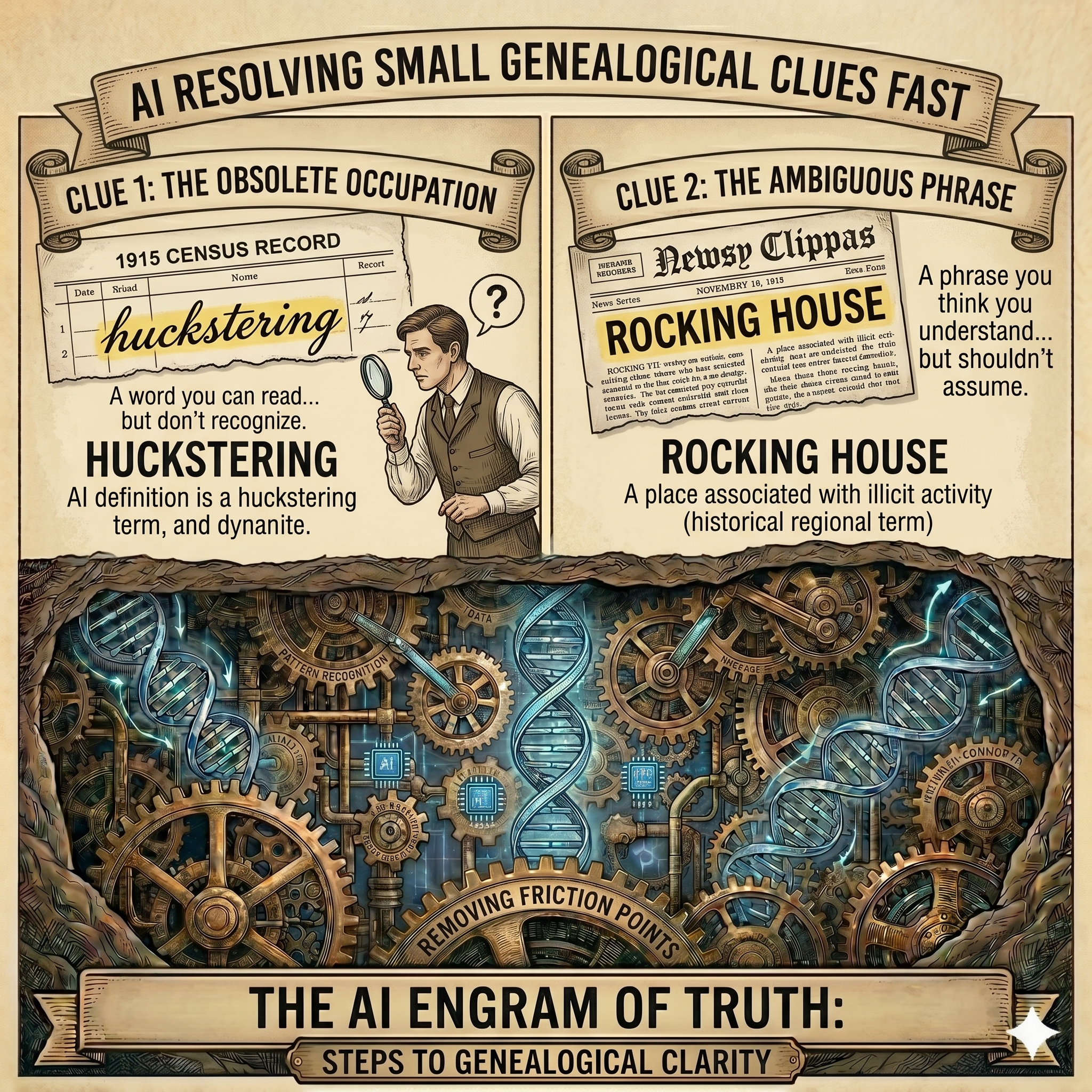
Two quick examples from real research: a 1915 census occupation that didn’t match anything familiar, and a 1932 newspaper charge that was easy to misinterpret. In both cases, AI filled in the gap—reading the text, interpreting outdated terms, and adding just enough context to move forward. This is where AI is most useful in genealogy: not replacing analysis, but removing the small obstacles that slow you down every day.
DNA Results Gave You More Questions Than Answers? Here’s Why
You took a DNA test expecting answers… and instead got more questions.
Unexpected matches, unfamiliar names, and relationships that don’t make sense leave many beginners stuck before they even start. The problem isn’t the DNA, it’s knowing how to read it.
In this short article, I break down why this happens and what most people are missing. If you’re trying to solve a close family mystery, I also created a simple, step-by-step guide to help you make sense of your results and take your first real steps forward.
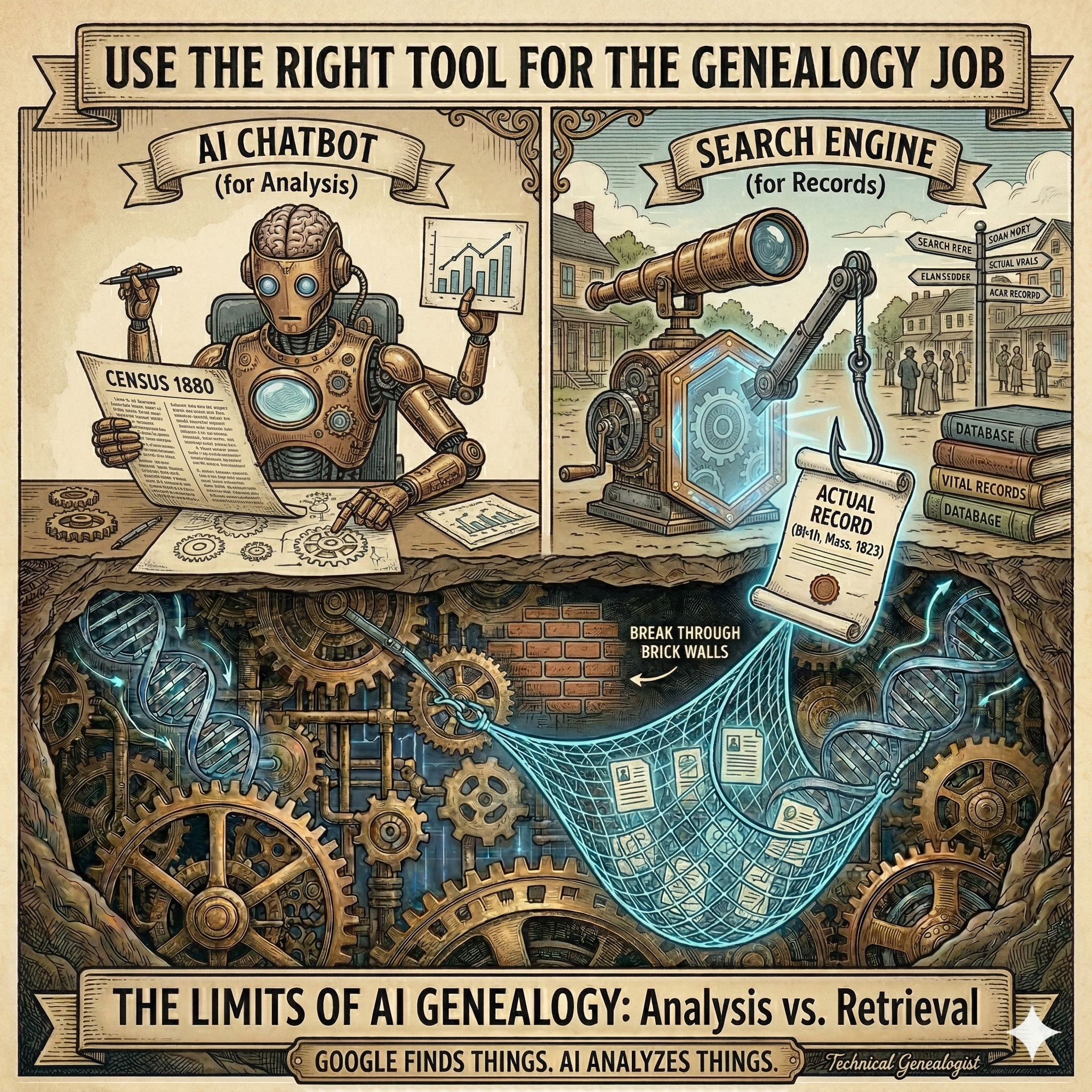
STOP ASKING AI TO “SEARCH” FOR YOUR ANCESTORS!!!
Most people are using AI completely wrong for genealogy. If you’re asking ChatGPT, Gemini, or similar tools to “find” your ancestor, you’re asking it to do something it simply cannot do. AI chatbots don’t search Ancestry, can’t access subscription databases, and don’t retrieve real records—they analyze what you give them.
This quick read explains what AI actually does well, what it doesn’t, and how to use it the right way so you stop wasting time and start getting real results.
Researching Black Families in the 1800s South: Why the Records Don’t Line Up
Tracing families in the late 1800s and early 1900s, especially Black families in the southern United States, is not as straightforward as it looks. Names shift, ages change, and records rarely line up the way we expect. In this 2 minute read, I walk through what I encountered while working two southern research cases and why applying a modern lens can cause you to miss the right person entirely, along with what to look for instead.
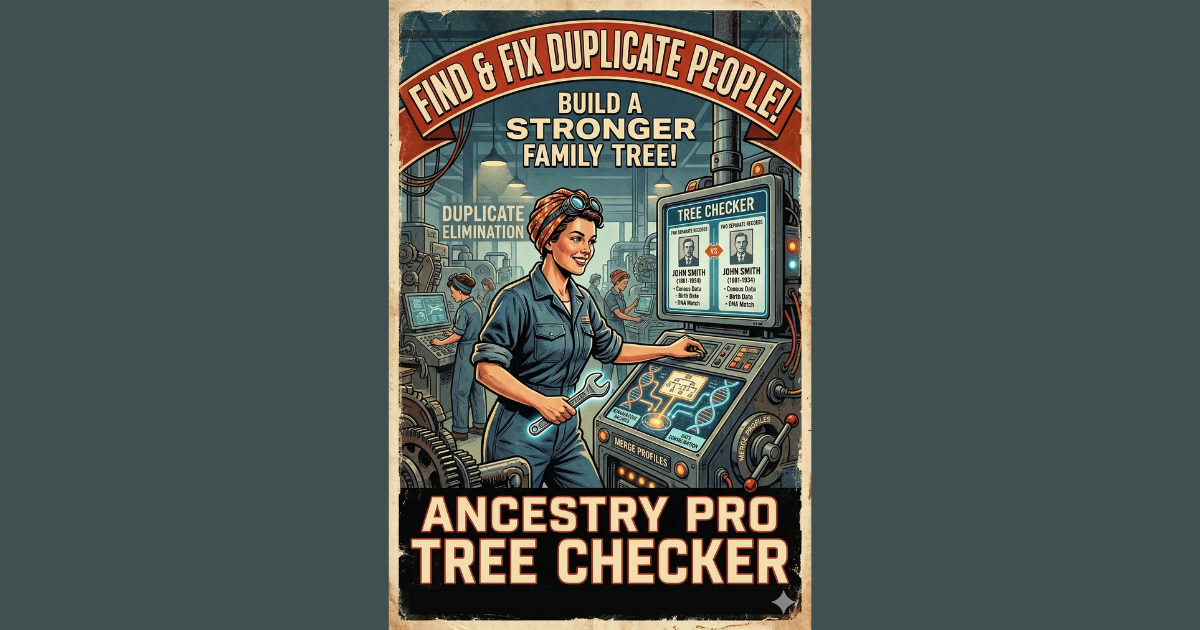
How to Use Ancestry Pro’s Tree Checker to Find and Fix Duplicate People in Your Family Tree
Handling duplicates in a family tree can feel overwhelming, but it doesn’t have to be. In this post I walk through why duplicates happen, how to spot them, and simple steps to clean them up without losing valuable information. It’s a quick guide for anyone trying to untangle a messy tree and make their research easier to manage.
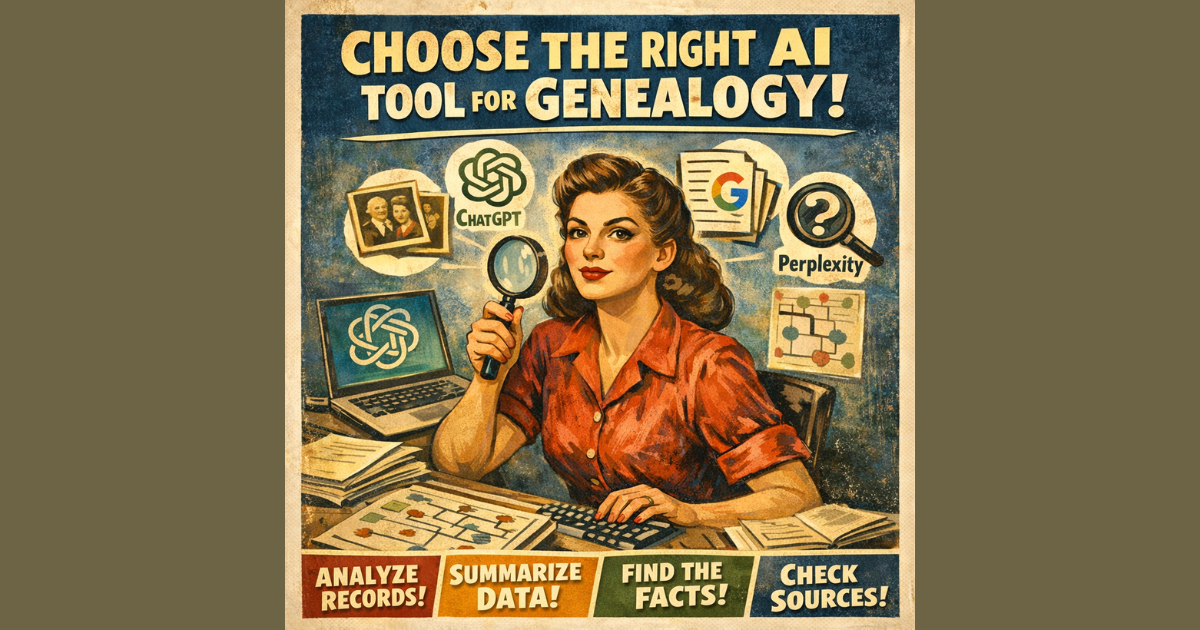
When to Use Which AI Tool for Genealogy
Not sure which AI tool to use for your genealogy research? ChatGPT, Gemini, Claude, Perplexity, NotebookLM, and Copilot all do different things well. In this post, I break down when to use each one so you can choose the right tool for document analysis, DNA questions, source-grounded research, fact-checking, and more.
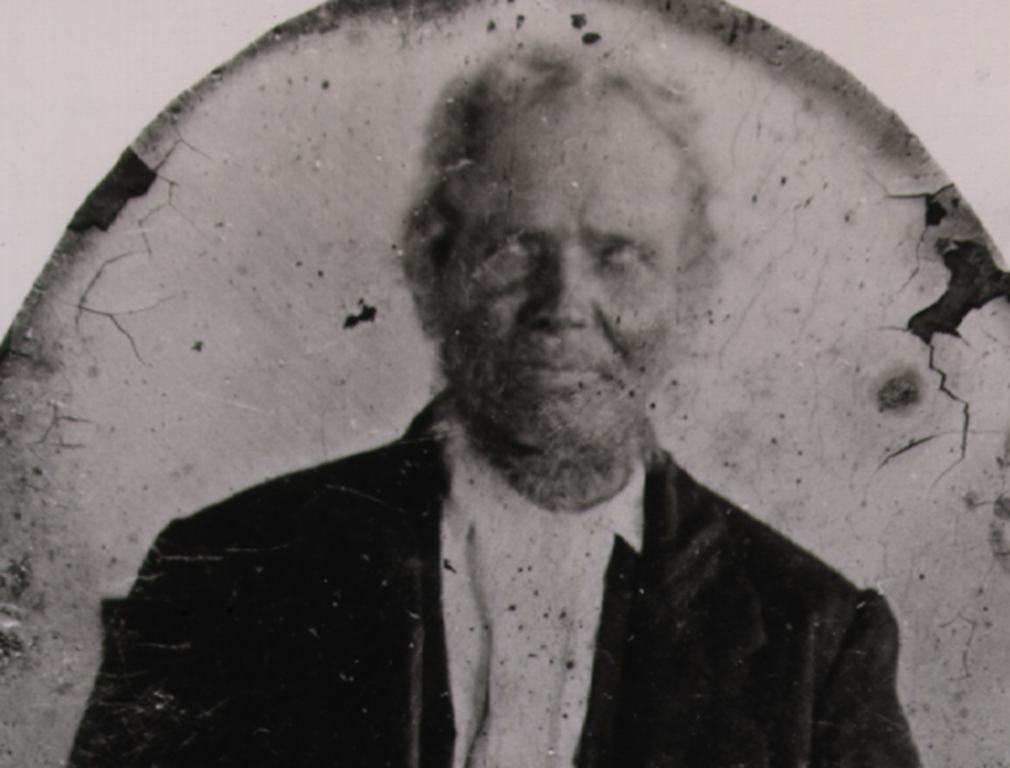
Bringing an 1870s Ancestor to Life with AI
I recently restored and animated an 1870s tintype of my ancestor, Hermann Jürgen Kroencke, using Gemini for careful image restoration and HeyGen for voice animation. The project was grounded in documented family history from a book my father wrote and that I have now republished. In this short post, I explain the exact prompts I used, how I chose an era-appropriate German voice, and why historical integrity matters when working with AI tools. If you are curious how to bring an old family photo to life without rewriting history, this walkthrough shows the process and the limits.
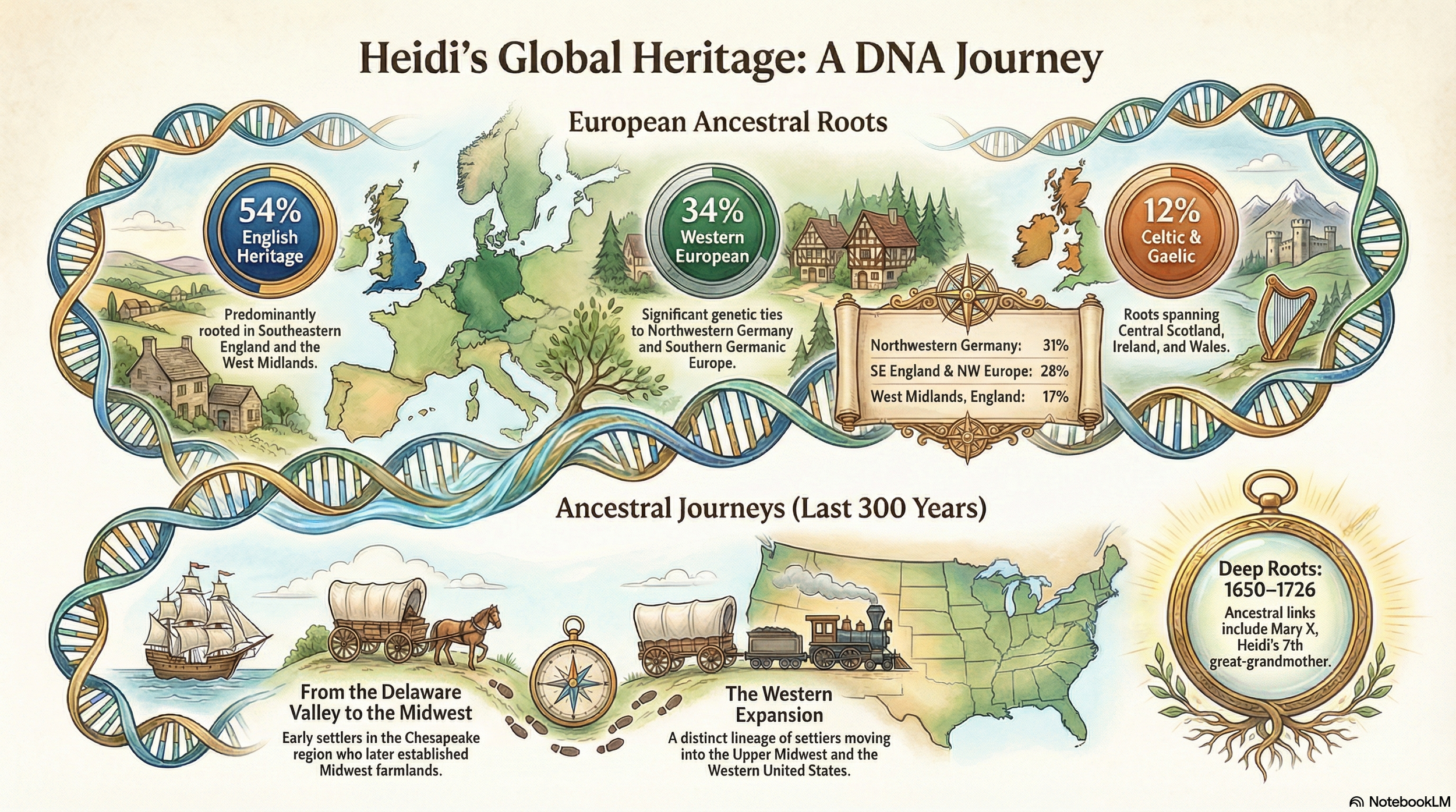
Turning Your AncestryDNA Results into an Infographic with Google NotebookLM
I used Google NotebookLM to turn my AncestryDNA ethnicity results and ancestral journeys into a single visual infographic. By uploading my screenshots and downloaded files and prompting it to focus on aesthetics and storytelling, I was able to transform static percentages into a cohesive ancestral narrative. In this post, I walk through the exact workflow and explain why keeping the AI grounded in your own uploaded sources matters for responsible genealogy.
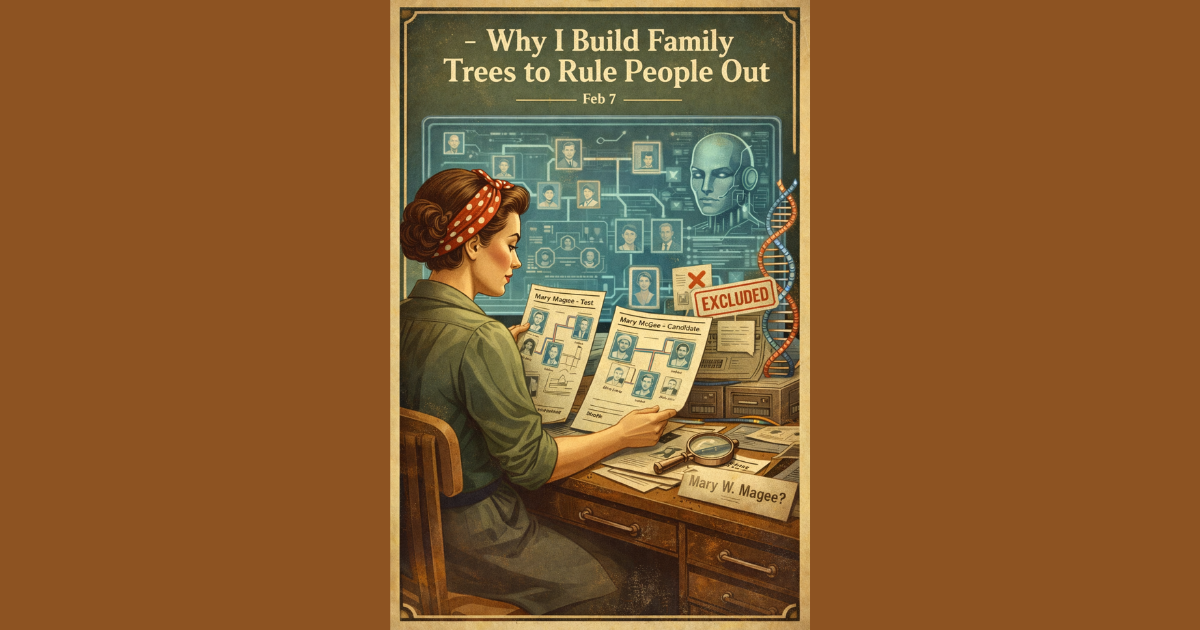
Why I Build Family Trees to Rule People Out
When a name is common, adding more ancestors can create more confusion. This post explains why I often build short, focused “test trees” to rule people out instead. Using a real case involving multiple Mary Magee candidates in 19th-century Illinois, I walk through how tracking each possibility forward in time helps eliminate the wrong individuals, document decisions, and avoid forcing connections that do not hold up.
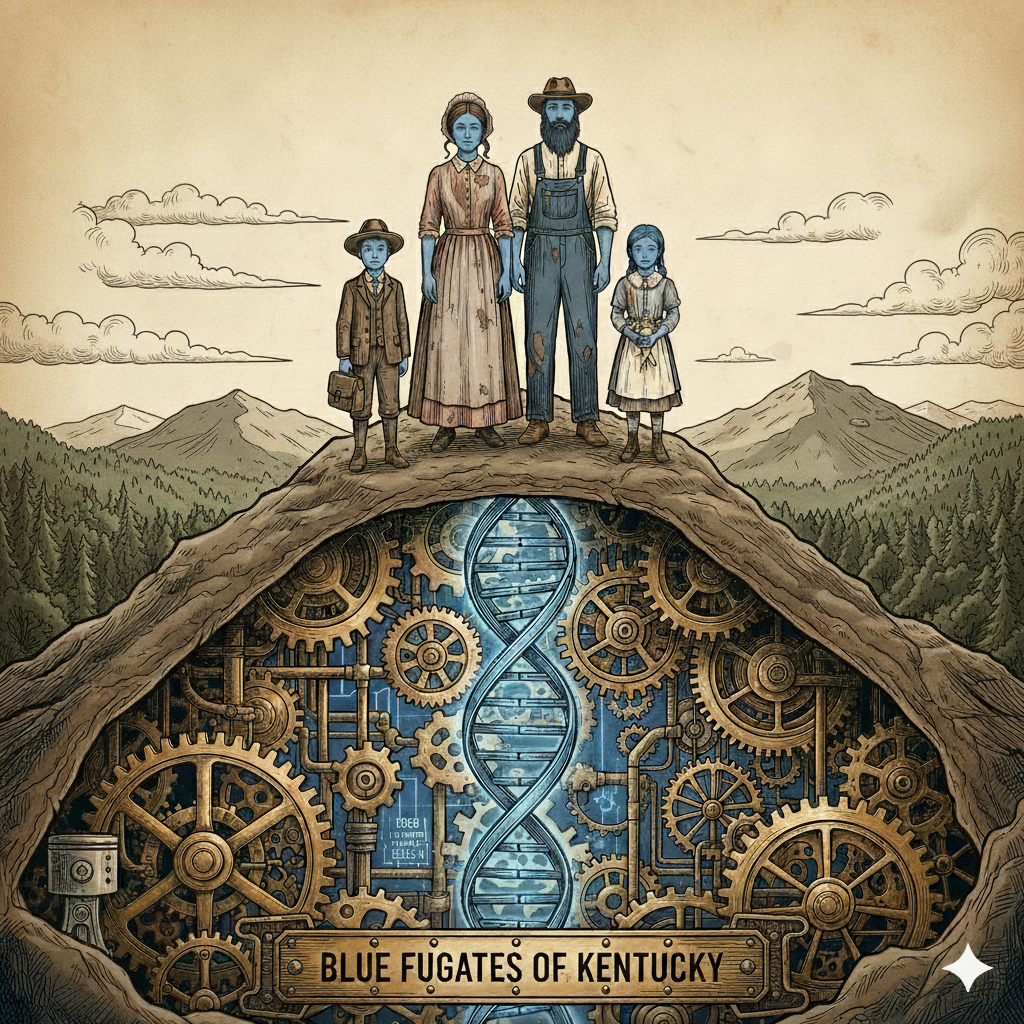
Proving a Connection to the “Blue Fugates” of Kentucky
In this case study, I trace a client’s family line to determine whether it truly connects to the historically documented Blue Fugates of Kentucky. Working without DNA, the research relied on careful record analysis, extended family reconstruction, and solving a challenging census problem where key relatives appeared to vanish. The result is a grounded look at how unusual family stories can be tested and, sometimes, confirmed using evidence-based genealogy.
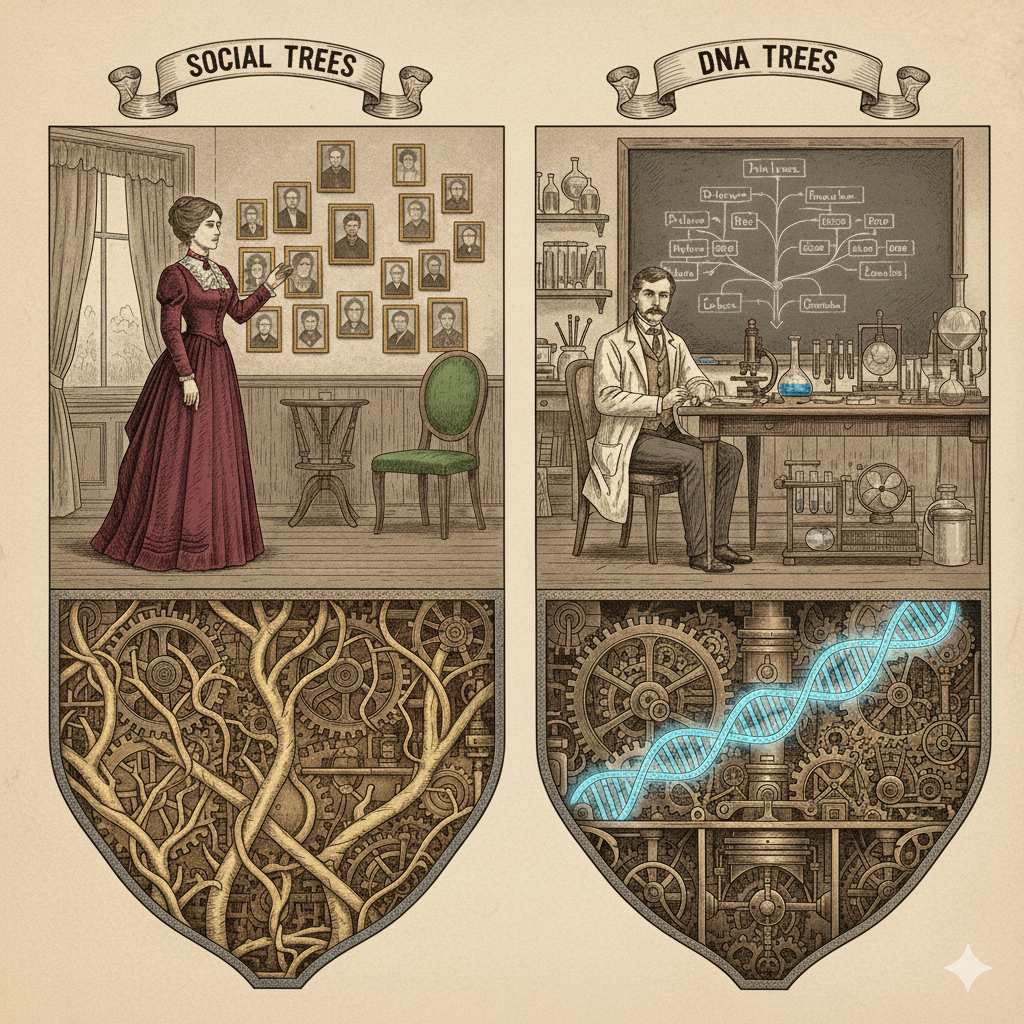
Best Practices for Tree Hygiene During DNA Research
Tree hygiene becomes critical once DNA enters the picture. This article covers practical best practices for maintaining clear tree structure during DNA research, including how privacy settings affect hints, when to use separate research trees, and why small structural choices can have big downstream effects on Ancestry’s DNA tools.
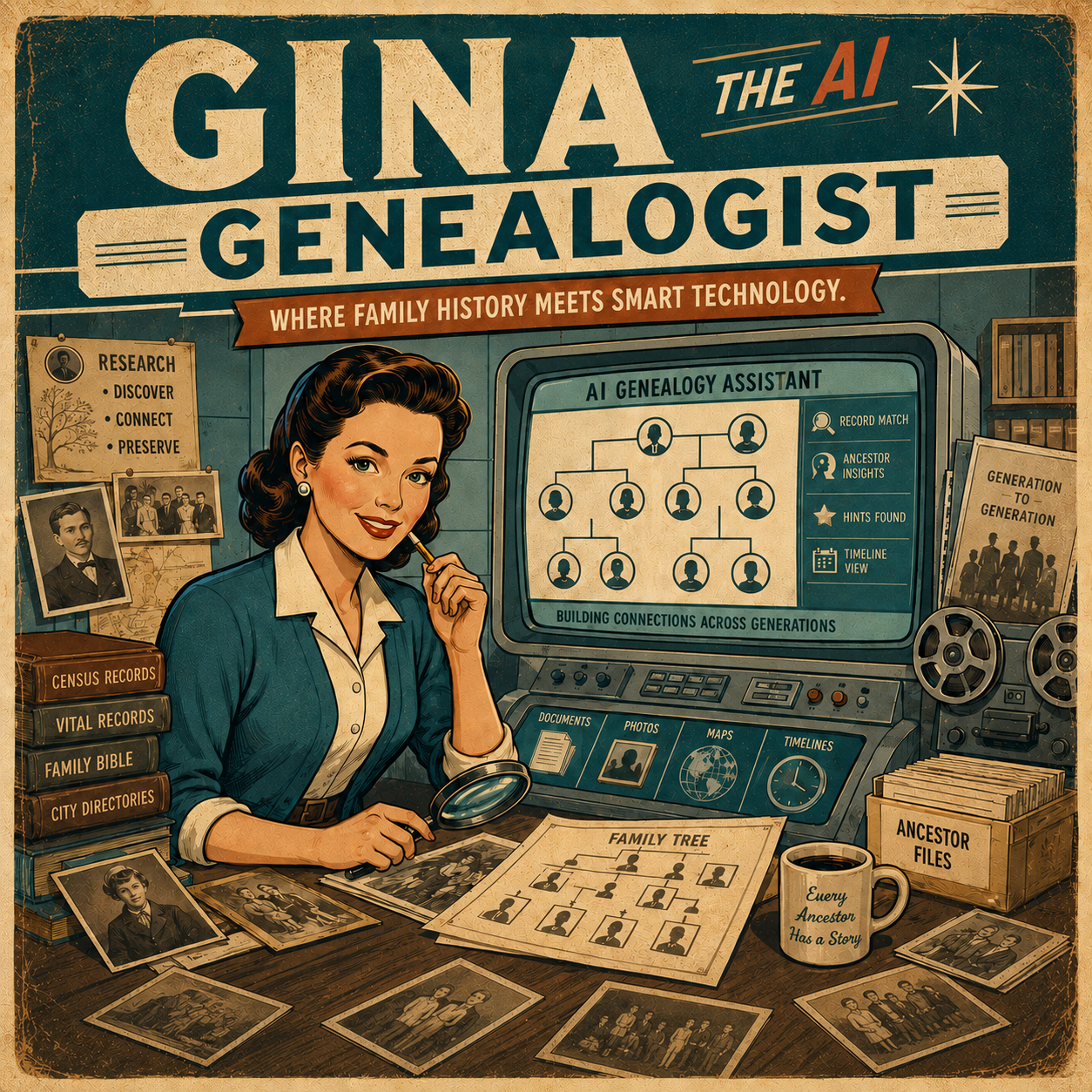
Why I Built “Gina the Genealogist Chatbot”
A short look at why I built “Gina the Genealogist Chatbot,” an evidence-first research assistant designed for real family history problems. This article explains how Gina avoids guessing, stays grounded in reputable sources, and helps researchers understand records, gaps, and DNA results with clear next steps.
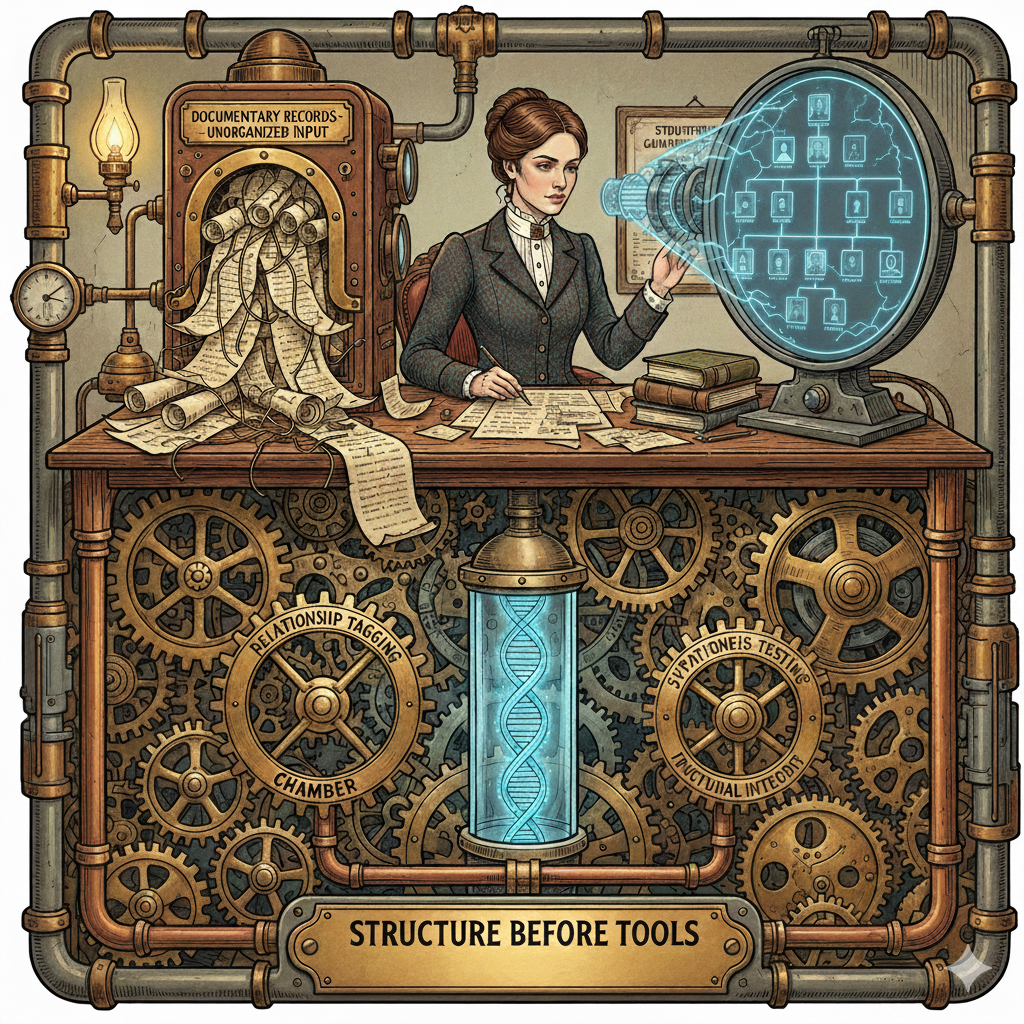
Tree Hygiene and DNA Algorithms: Why Structure Matters Before You Link DNA
When DNA suggests a different biological parent than the one shown in records, many family trees start to break down. This article explains why tree structure matters for Ancestry’s DNA tools, how algorithms like ThruLines interpret relationships, and the two main ways to organize a tree so DNA evidence produces clearer, more reliable results.