Turning Decades of Research Into a Single Visual: How NotebookLM Helps Genealogists See the Big Picture
Recently, I experimented with Google NotebookLM and its infographic tools, and the results were striking. I uploaded the full PDF of my book The Solomon Gang: Outlaws by Any Name and, within minutes, NotebookLM produced a clear visual summary of nearly three decades of documented research.
Rather than pulling from the internet, NotebookLM works only with the material you provide. You upload your own documents, and the AI explains, organizes, summarizes, and visualizes that content without introducing outside information. For genealogists, that distinction matters.
Our research is often dense and fragmented. Court records, census schedules, prison files, newspaper articles, correspondence, and notes accumulate over years or decades. Seeing all of that material distilled into a single diagram is not only useful, it is clarifying. Patterns that take chapters to explain suddenly become visible at a glance.
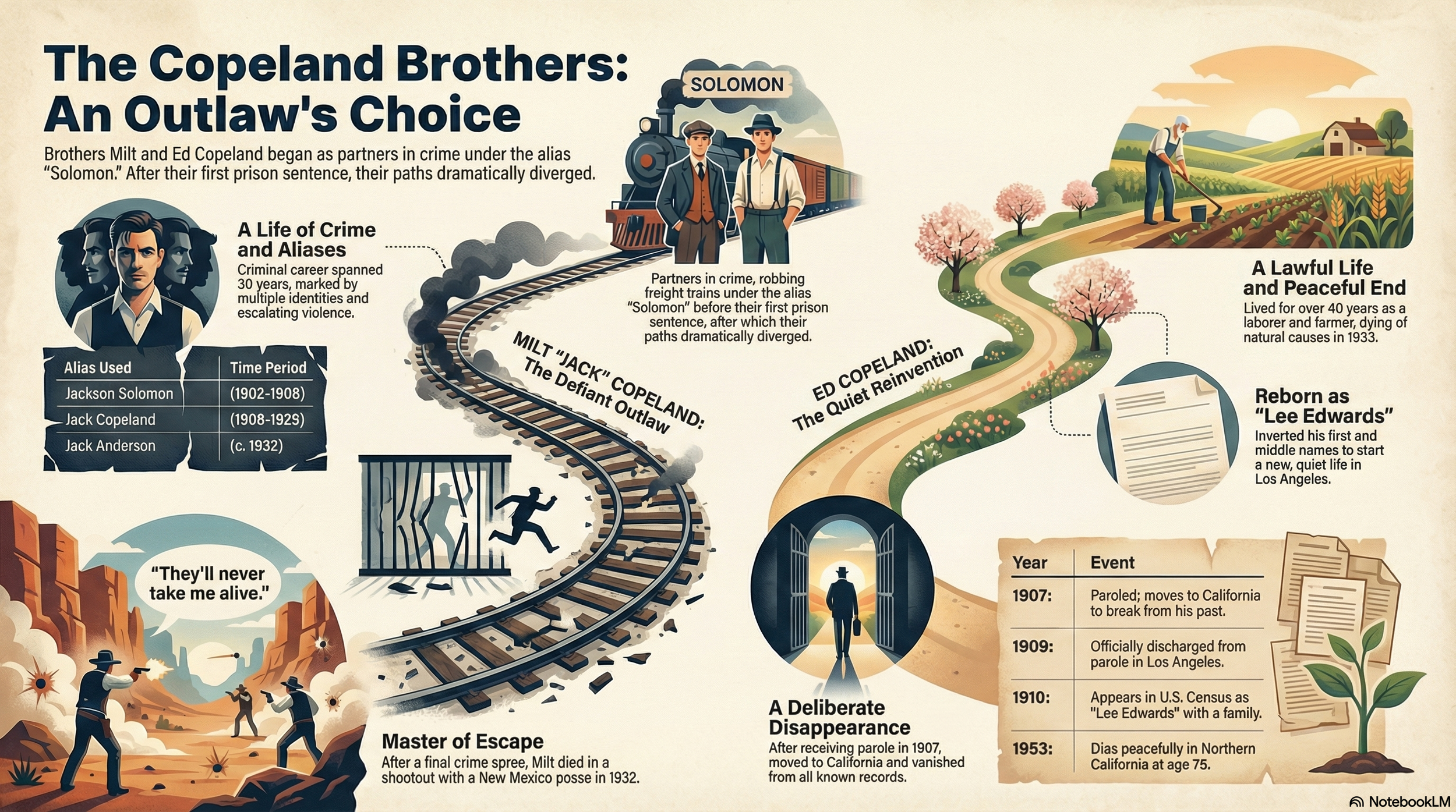
Google NotebookLM output - example 1
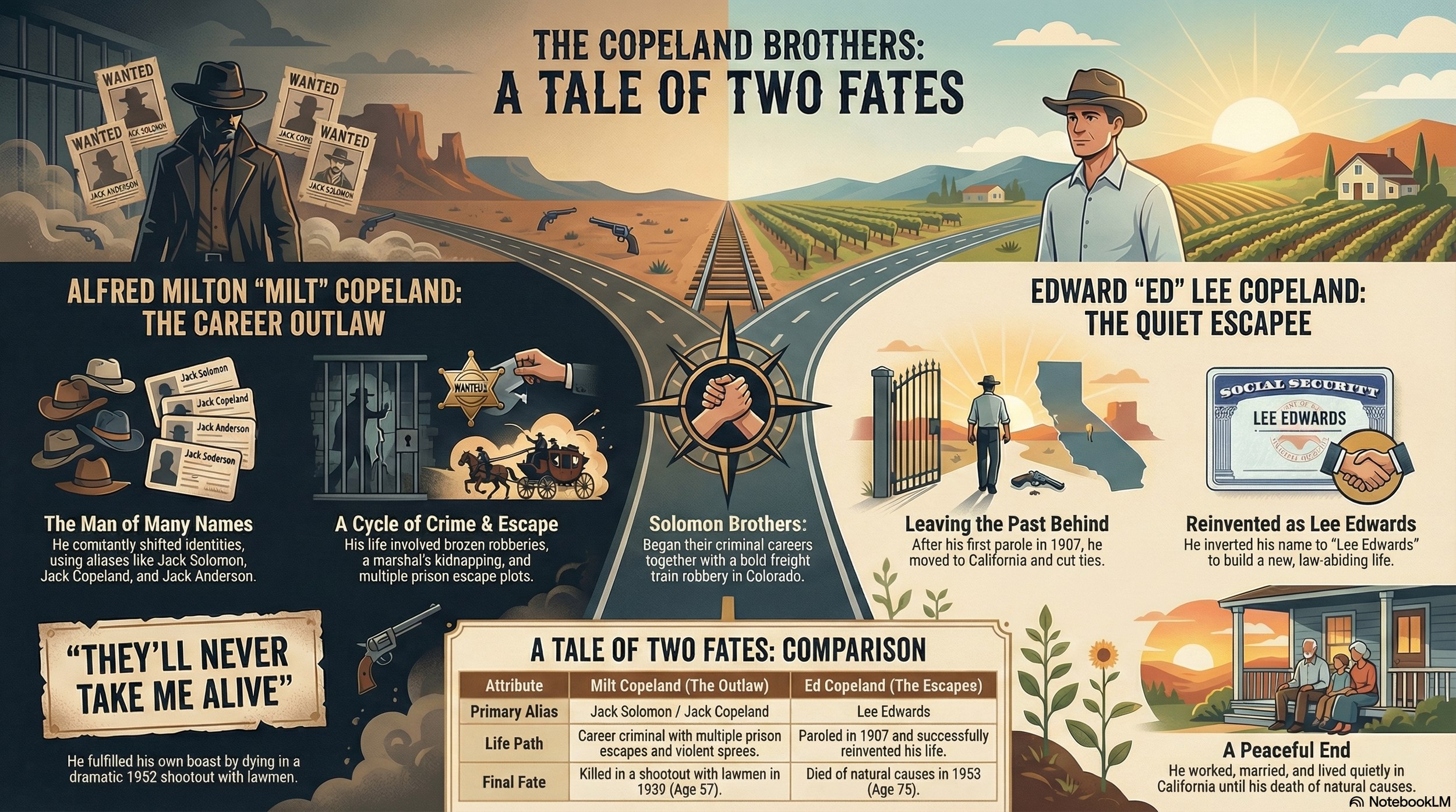
Google NotebookLM - example 2
The infographic it produced captured the core structure of my book: two brothers who began their adult lives using the same alias, “Solomon,” but whose paths diverged after incarceration. One continued running and reinventing himself through new identities. The other rebuilt quietly, changed his name, and lived out his life as a farmer in California. Timeline events, aliases, locations, and decisions were all laid out visually in a way that normally requires extensive narrative.
What stood out most was how effectively the visual format communicated complexity without oversimplifying the research. This is where AI tools are genuinely useful in genealogy. Not for inventing facts or replacing records, but for organizing verified research into formats that are easier to analyze, understand, and share.
Genealogy is still built on original sources and careful evaluation. That does not change. But tools like NotebookLM can help translate that work into summaries, diagrams, and visual storytelling that make long projects more accessible, especially when sharing research with family members, readers, or clients.
If you are working on a large research project, writing a family history, or trying to make sense of years of accumulated material, seeing your work through a different lens can be valuable. Sometimes a new format reveals connections you already knew, but had not yet seen clearly.
Other AI tools can generate infographics as well, and it is worth experimenting to see which best fits your workflow.
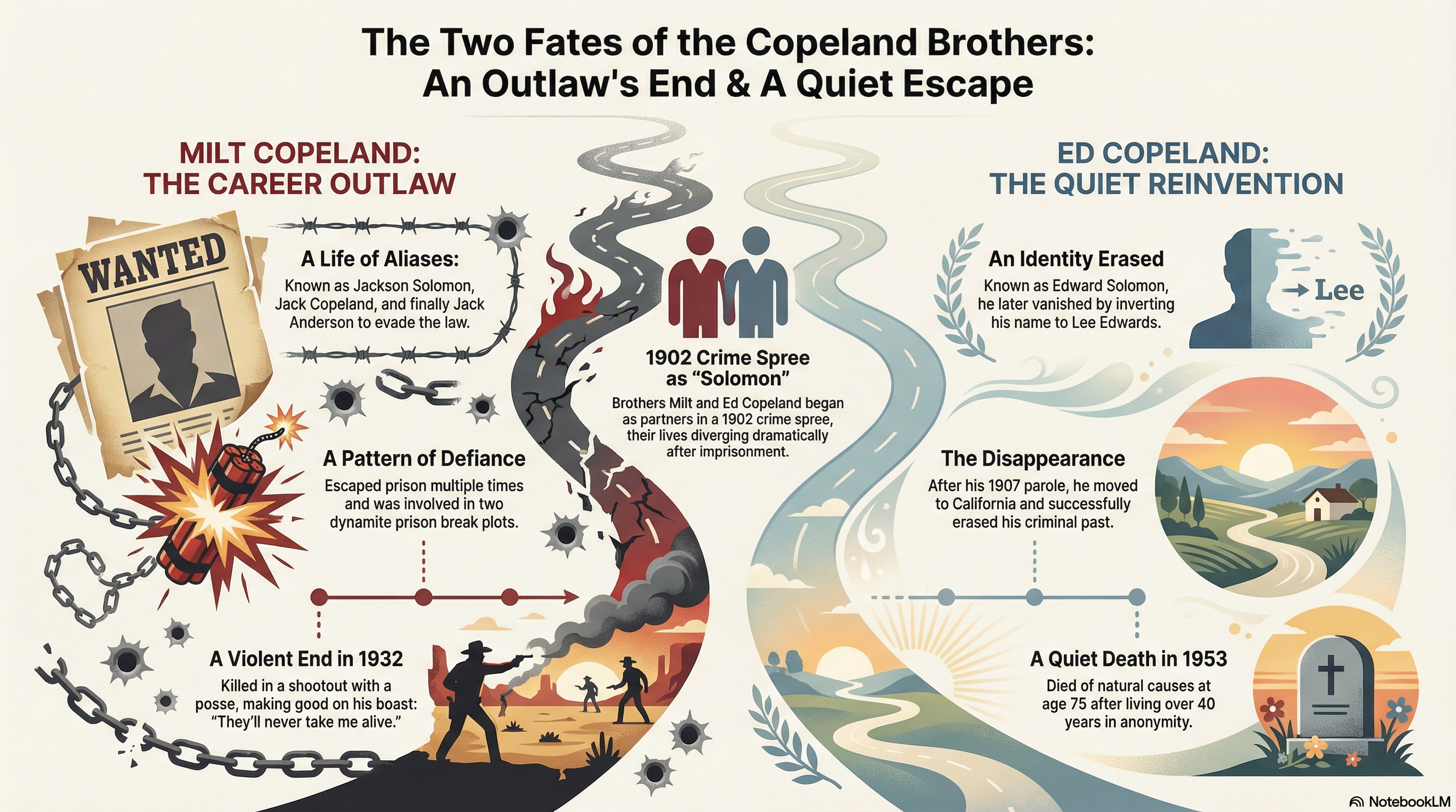
Here is an alternative version it created, which I didn’t like as much:
If you’re looking for help with your own research, I offer professional genealogy and DNA analysis services. And I recently published a fast start guide that will take you step by step through all the features of Google NotebookLM.
