One of the frustrating things about historical research is knowing that records exist somewhere, but not being able to access them online. That was exactly the situation I encountered while researching my true crime Western, The Solomon Gang: Outlaws by Any Name.
My book follows two brothers, Milton and Edward Copeland, who operated under multiple aliases and were involved in a series of crimes, prison escapes, and manhunts across the American West. One particularly eventful chapter covers a 1914 prison escape and the subsequent pursuit through the mountains and mining communities of Colorado. Newspaper coverage was essential to reconstructing those events, but there were gaps in the digitized newspapers from the very communities where the events unfolded.
Rather than accepting those gaps, I decided to help get the missing newspapers digitized myself.
Discovering Colorado's Adopt a Paper Program
The Colorado Historic Newspapers Collection (CHNC) is a remarkable free resource operated by the Colorado State Library. It provides public access to millions of pages of historical Colorado newspapers, including many small-town publications that are difficult to find elsewhere.
What I didn't initially realize was that individual researchers can help fund the digitization of newspapers that aren't yet available online. Through CHNC's Support CHNC / Adopt a Paper page, I discovered an interactive map showing the locations of newspapers that still need digitization support. Researchers can explore the map, identify newspapers from a particular community or region, and work with CHNC to support getting additional issues online.
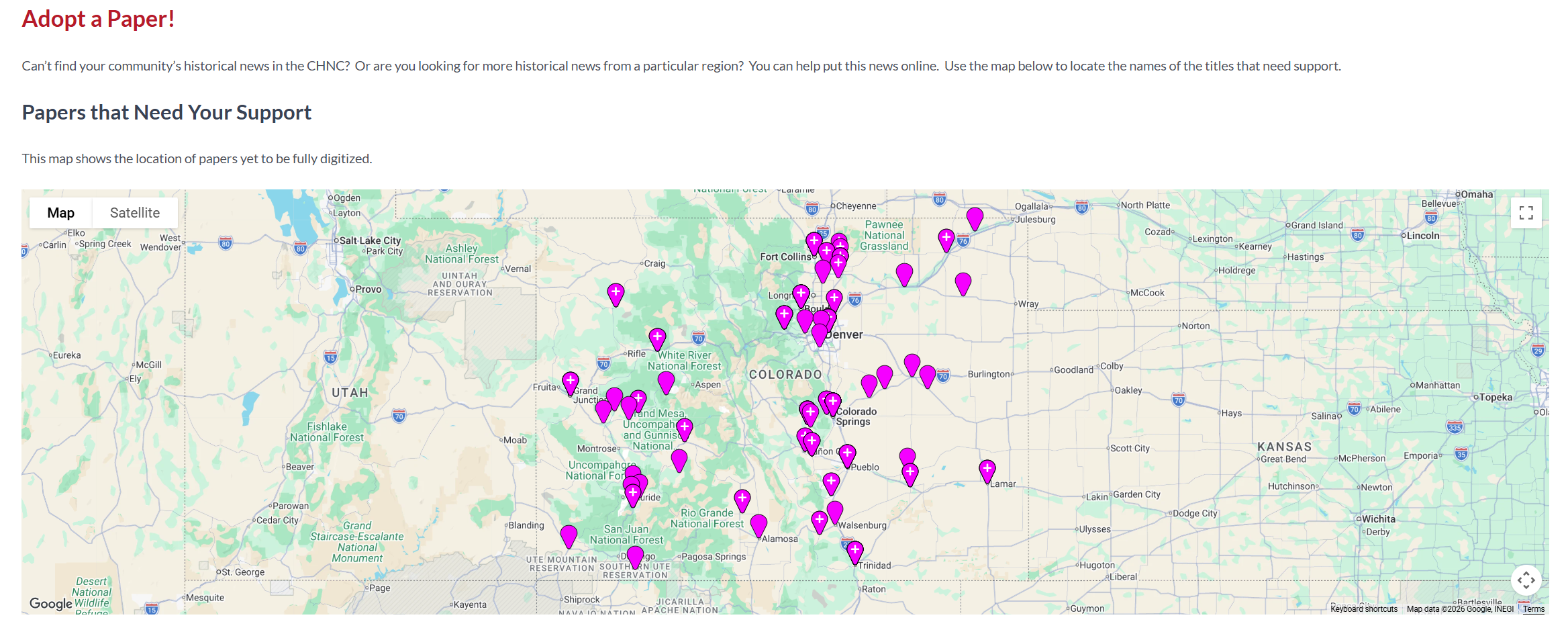
For genealogists and historical researchers, this is an incredible opportunity. Instead of waiting and hoping a missing newspaper will eventually appear online, you can help make it happen.
Choosing a Newspaper from 1914
I knew exactly which historical period interested me. My research had led me to Cripple Creek and Victor, Colorado, where local newspapers extensively covered the 1914 escape and pursuit of Jack Copeland, one of the central figures in my book.
Using the CHNC map and working with their team, I contributed toward digitizing several months of The Cripple Creek Times and The Victor Daily Record. On October 30, 2026, I received an email from Leigh Jeremias at CHNC confirming that the newly digitized issues, covering January 13 through May 31, 1914, were now available online.
Just like that, more than four months of historical newspapers became accessible to researchers everywhere.
Browse the newly digitized newspaper collection
Thirteen New Articles, Including Stories I Had Never Seen
Of course, the first thing I did was search the newly available newspapers for Copeland and the events surrounding his escape. I found 13 additional articles, including some substantial reports that I had never encountered before.
One particularly interesting article, published May 5, 1914, carried the headline Wicks Ranch Gets Visit from the Convict Copeland. It described one of the episodes during his time as a fugitive, providing the kind of colorful historical reporting that makes old newspapers so valuable. Other articles offered additional details about the people, locations, and events surrounding the manhunt.
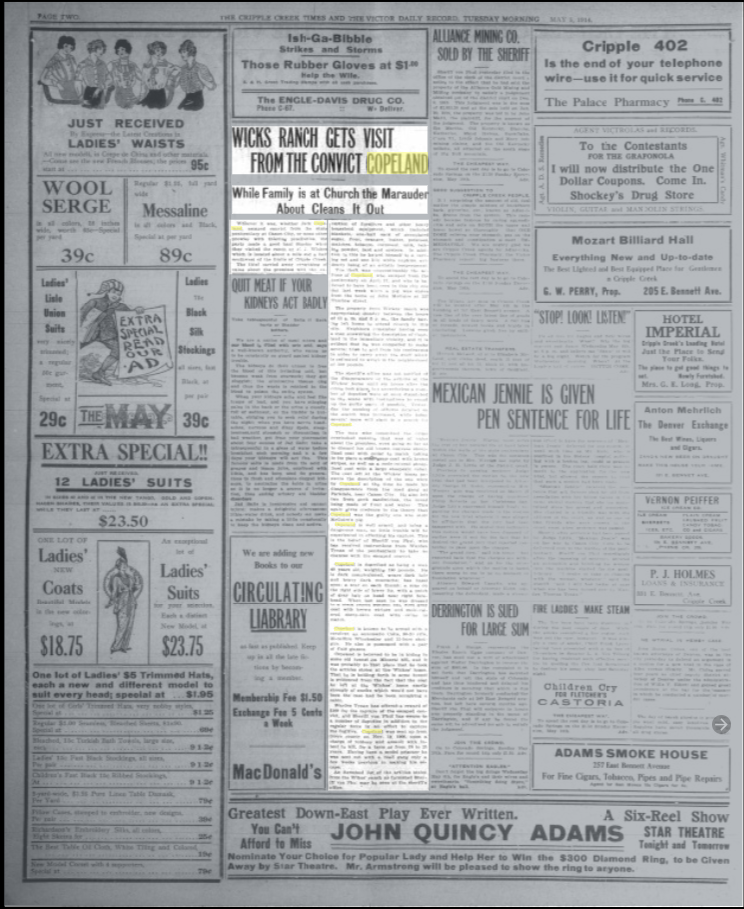
Even though my book was already published, I was still uncovering important historical material. That's one of the lessons I've learned from this project: finishing a book doesn't mean you've exhausted the historical record. Sometimes the information you need simply hasn't been made accessible yet.
Why CHNC Deserves Recognition
I've worked with many archives, libraries, and newspaper collections during my research, and I want to give special recognition to the Colorado Historic Newspapers Collection and the people behind it. CHNC isn't simply preserving historical newspapers. It's making them freely accessible to everyone.
Historical newspapers often contain information that never appeared in official records: eyewitness descriptions, family relationships, personal details, local disputes, and entire stories that might otherwise be lost. When a newspaper is digitized, the benefits extend far beyond the person who helped fund it. Genealogists, historians, students, and anyone interested in local history can discover something new.
I also appreciated working directly with the CHNC team, including Leigh Jeremias, who kept me informed about the newly available material. The organization works with libraries, historical societies, organizations, and individual researchers to expand its collection. It's a wonderful example of how community support can help preserve history.
Have You Considered Adopting a Newspaper?
If you've ever searched for an ancestor in a historical newspaper database and discovered that the years you need are missing, consider investigating whether those issues exist but haven't yet been digitized.
If your research involves Colorado, I strongly encourage you to explore CHNC's Adopt a Paper program. You may be able to help make the records you're looking for available online while creating a resource that countless other researchers can use.
In my case, contributing toward the digitization of several months of a 1914 newspaper resulted in 13 newly discovered articles and valuable new information for my ongoing Solomon Gang research. But the greatest benefit is that those newspapers are now available to everyone.
That's a contribution to history that extends far beyond a single research project.
