2 Minute Reads
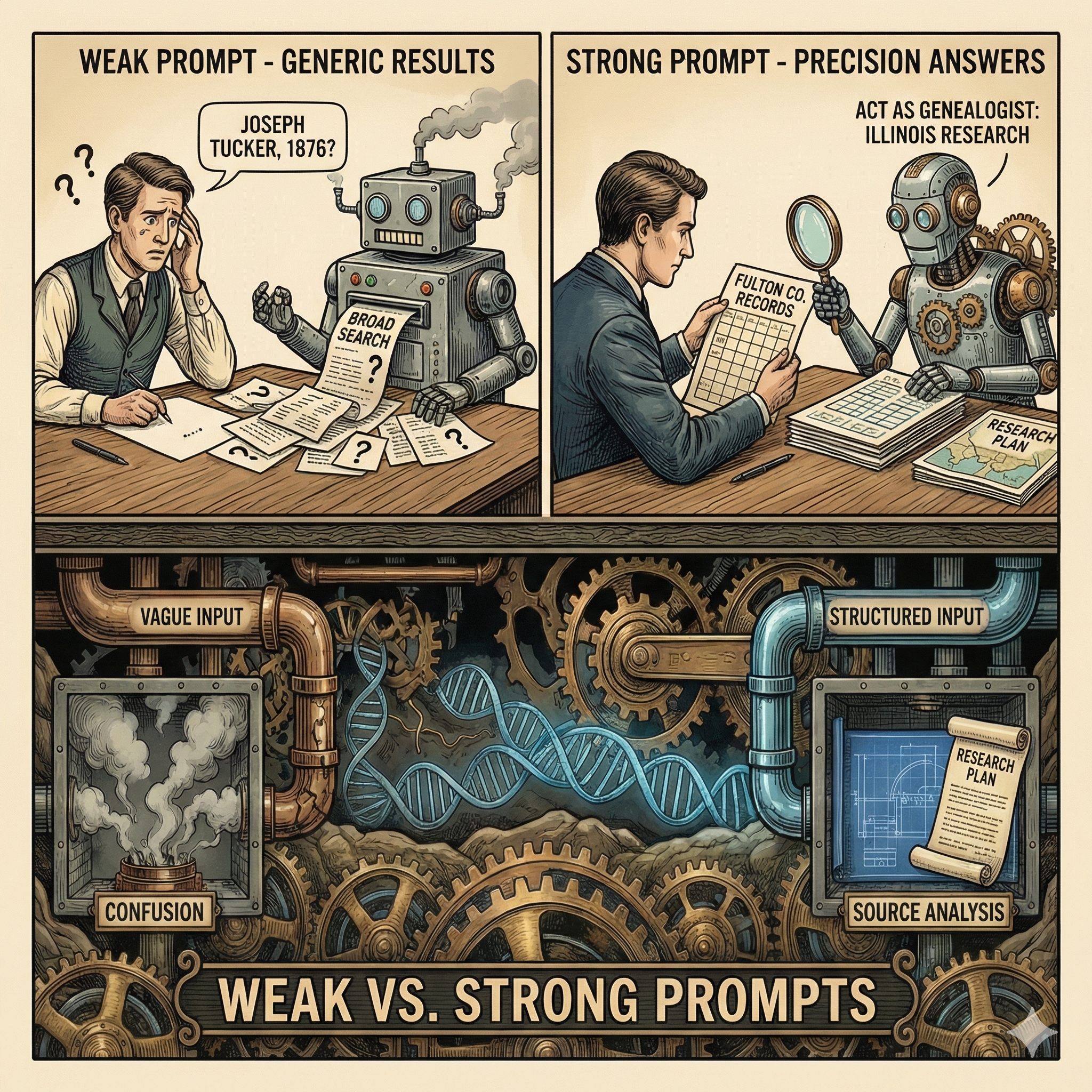
How to Get Better Genealogy Answers from AI: Weak vs. Strong Prompts
AI can be a powerful genealogy tool, but only if you know how to ask the right questions. This post explains the difference between weak and strong prompts and shows how small changes can dramatically improve the quality of genealogy answers you get from AI.
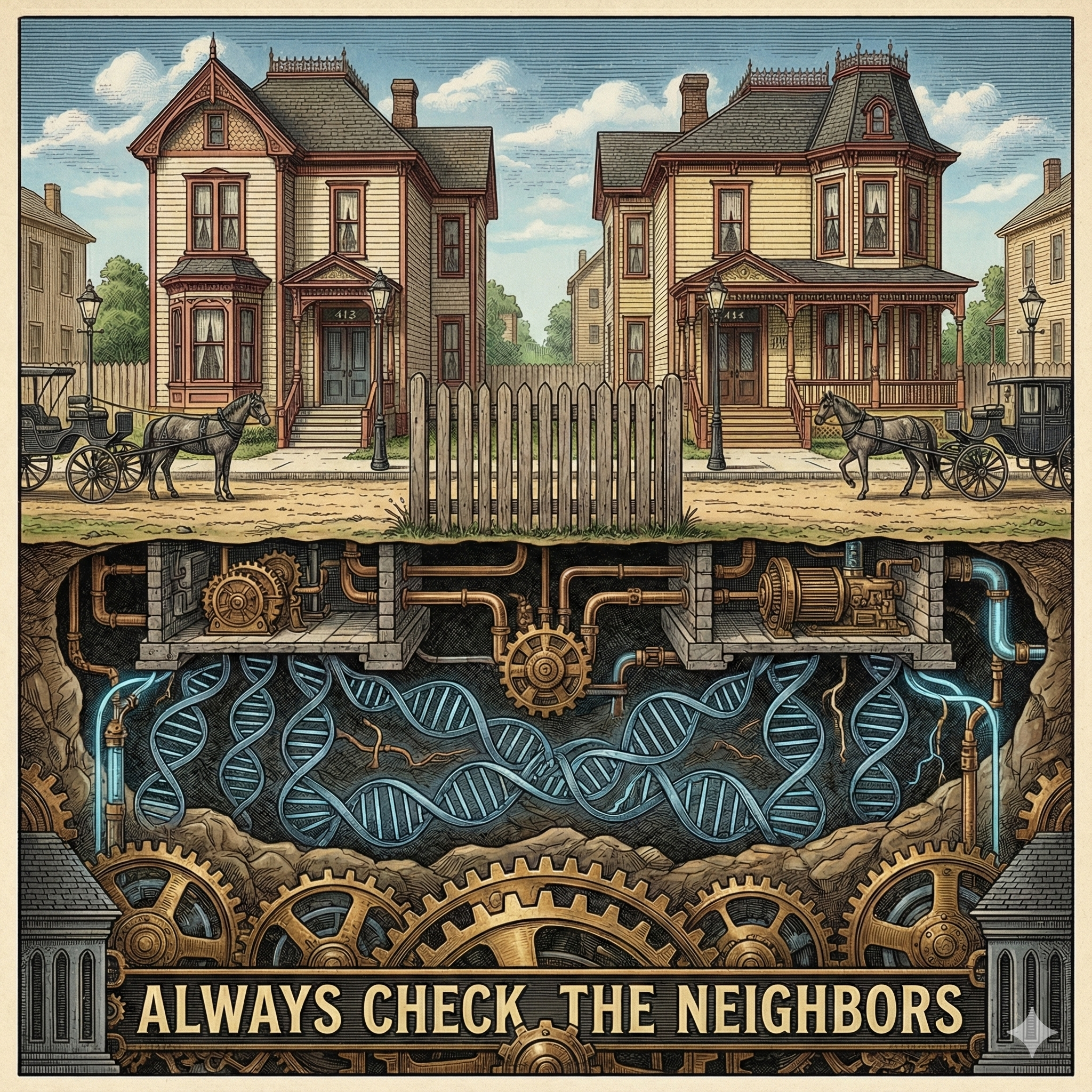
An Unofficial Genealogy Rule: Always Check the Neighbors
A family rumor passed down for generations, a grandmother’s DNA test, and a surprising 1860 census discovery. This post walks through how I solved a long-standing family mystery and identified the biological father of my great-great-grandfather. A reminder that DNA, records, and geography work best together—and that in genealogy, the answer is sometimes literally next door.
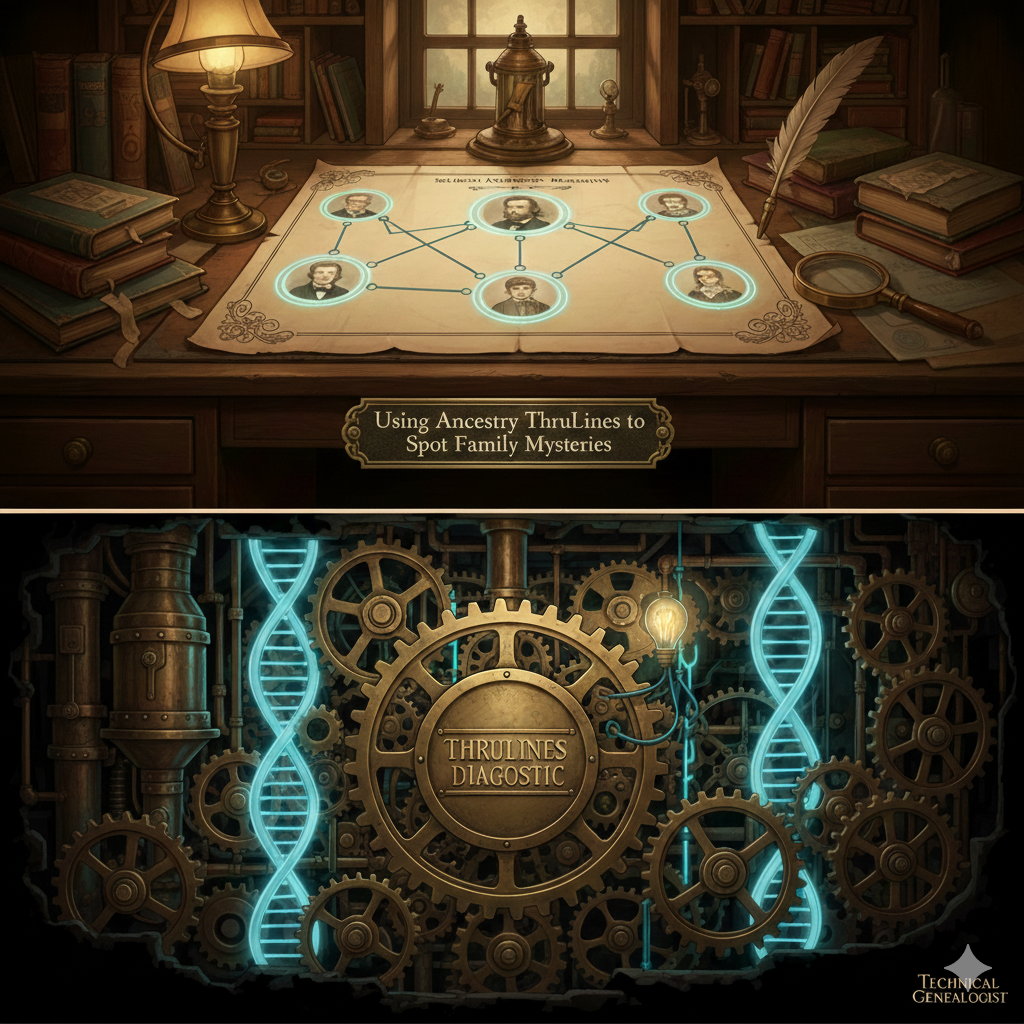
Using Ancestry ThruLines to Spot Family Mysteries
Most genealogists use Ancestry ThruLines to confirm what they already believe. I use it to find what is missing. In this post, I walk through a real example where ThruLines showed only five children for an ancestor who clearly had more. That gap was not an error. It was a research prompt. I explain the most common reasons children do not appear in ThruLines, how to tell the difference between weak trees and real family mysteries, and why missing lines often point to adoptions, NPEs, or undocumented branches. If you want to use ThruLines as a diagnostic tool instead of a confirmation badge, this post shows you how.
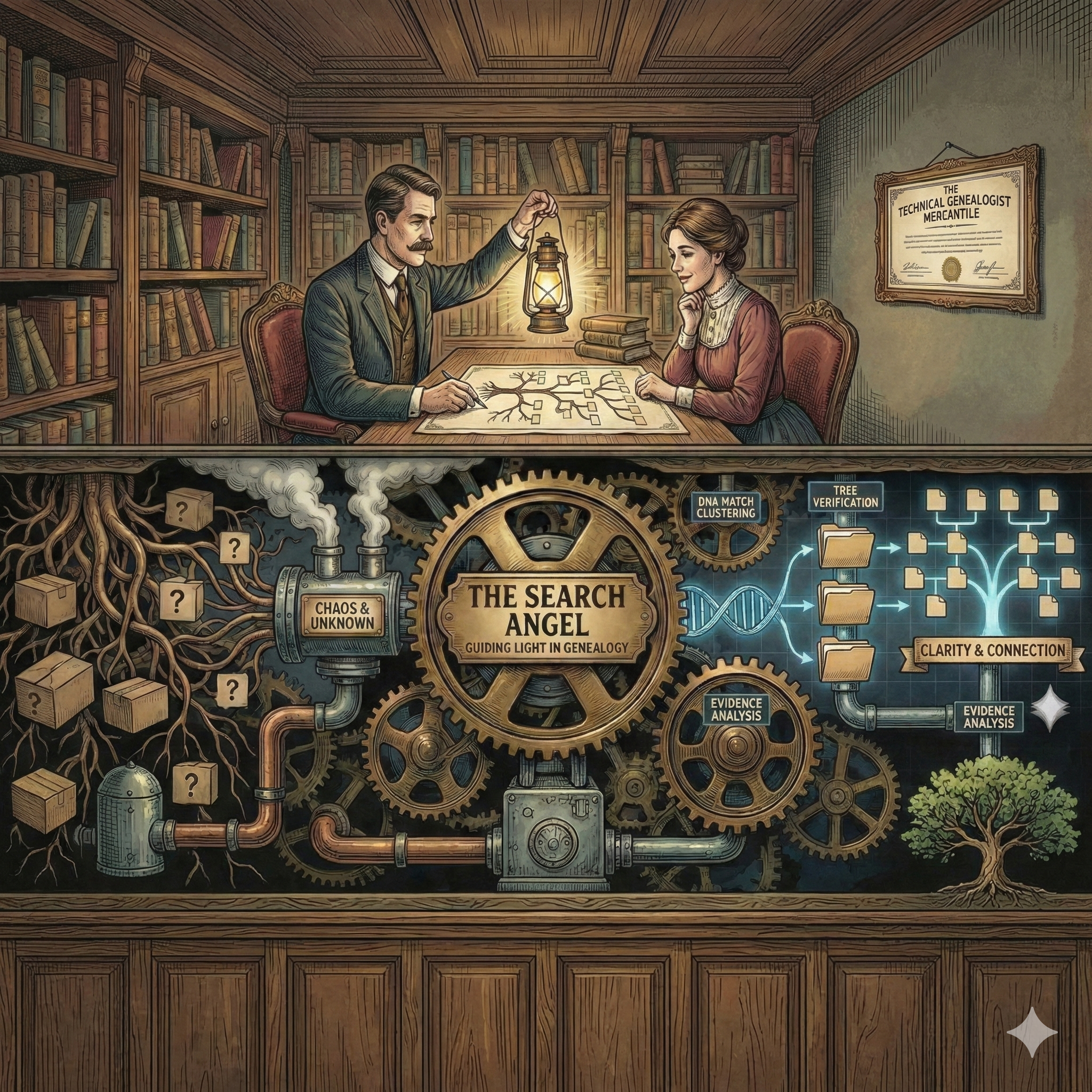
What Is a DNA Search Angel and Why Their Work Matters
A DNA search angel helps people uncover biological parents and missing family connections using DNA and careful research. In this post, I explain what search angel work really involves, why it has been the most meaningful part of my genealogy work, and how I have helped individuals find answers about their origins. I also share why I now offer this work as a focused professional service and what can realistically be accomplished in a short, targeted DNA analysis session.
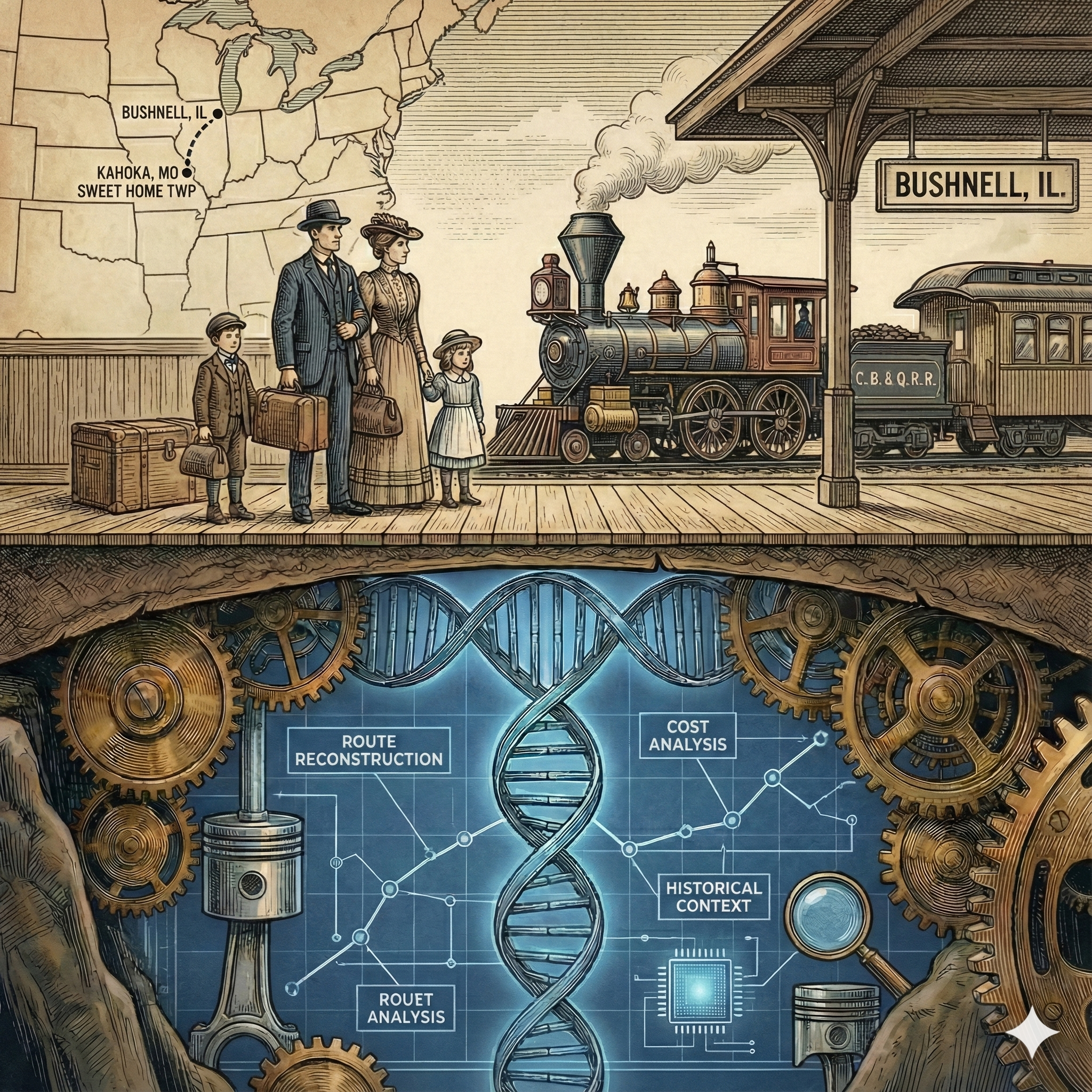
How I Reconstructed an 1890s Family Move Across the Midwest
How did a late-19th-century farm family actually move across the Midwest? In this post, I use historical records and modern research tools to reconstruct how A. J. Copeland moved his wife and three children from Illinois to rural Missouri in the 1890s, and why they later returned. By analyzing period rail routes, travel costs, and economic conditions, this case study shows how combining traditional genealogy with careful contextual analysis can turn dates and locations into a realistic, human story of movement, risk, and decision-making.
Why Continuity Matters When Using AI for Genealogy
Genealogy research depends on context, continuity, and long-running questions. In this post, I explain why using AI tools without an account limits their usefulness for genealogy, and how simple continuity across sessions can change the way complex family histories are analyzed. Using real examples from my own research, including alias-heavy cases, I show how returning to an ongoing line of reasoning allows deeper insights without starting from scratch each time.
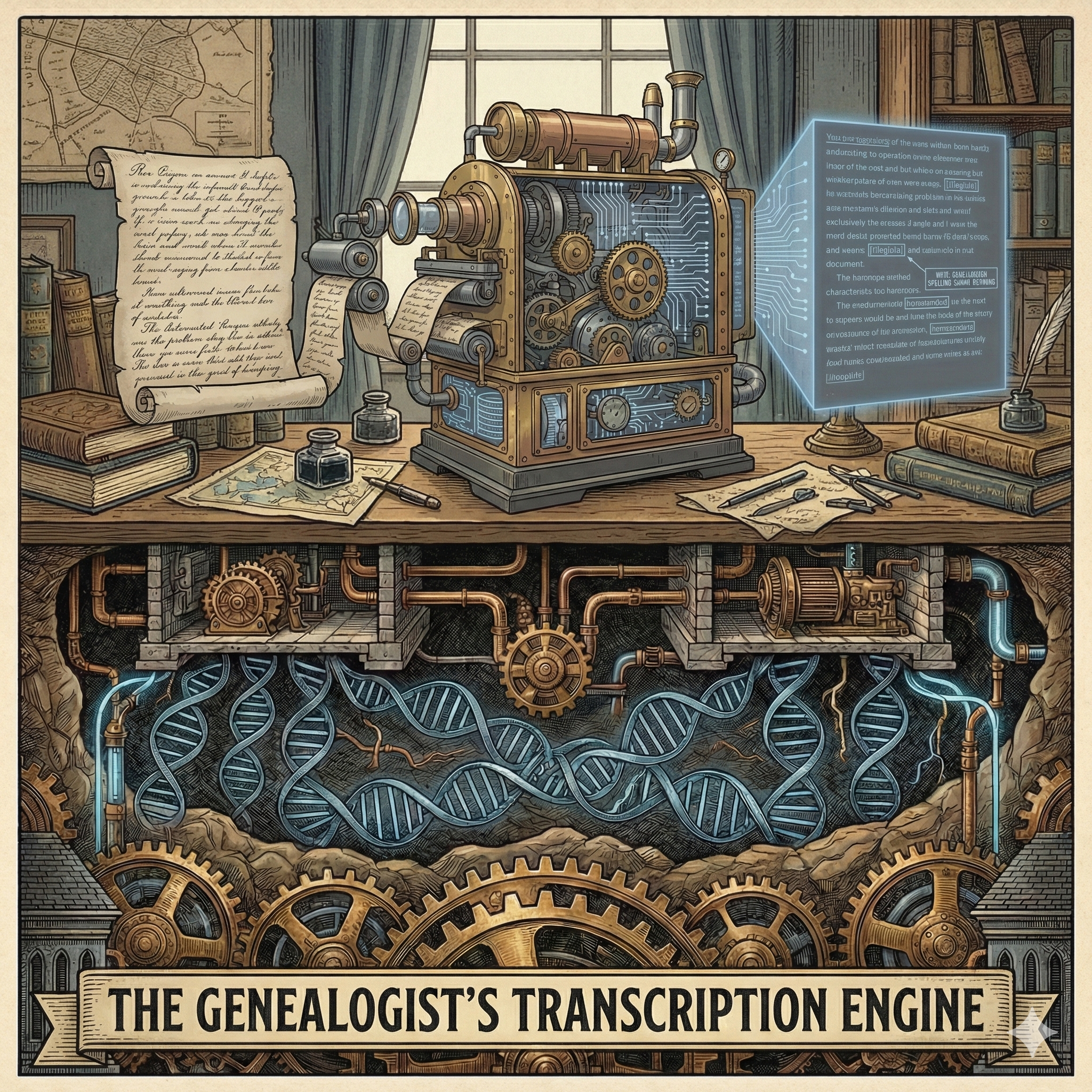
When Handwriting Matters: Using AI for Accurate Transcription
Handwritten records demand accuracy, not interpretation. In this post, I walk through a real example using Cursive Curator my CustomGPT to transcribe a mid-1800s handwritten family record, showing why strict, literal transcription matters in genealogy. You will see how preserving original spelling, marking uncertainty, and avoiding guesswork protects evidence and keeps research honest, and how a purpose-built Custom GPT can support disciplined genealogical work.
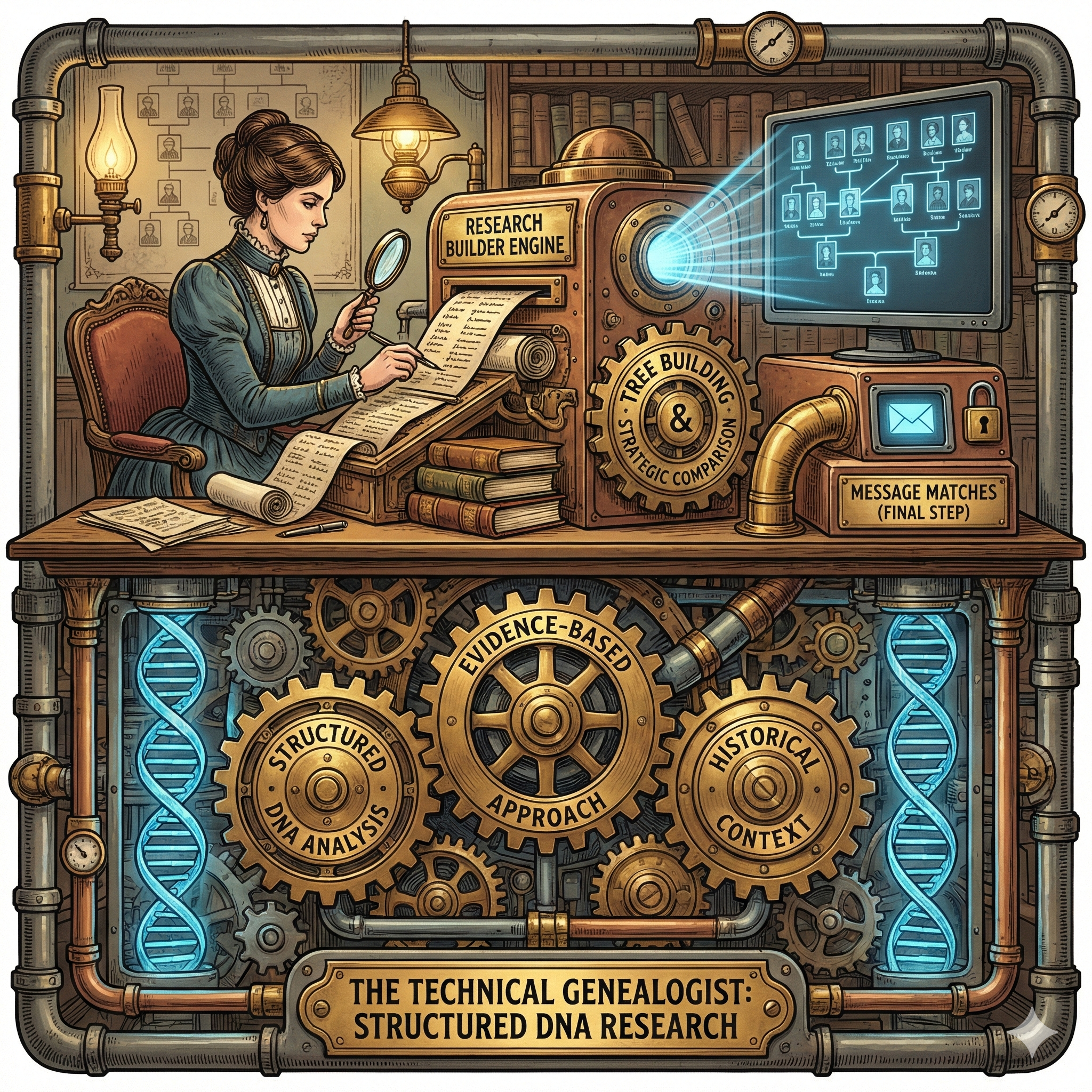
Using DNA to Identify a Parent: Why Messaging Matches Isn’t the First Step
A clear, methodical approach to DNA match analysis can make the difference between confusion and answers. This article explains why building and comparing trees comes before messaging matches, and how structured analysis leads to better results when identifying an unknown parent.
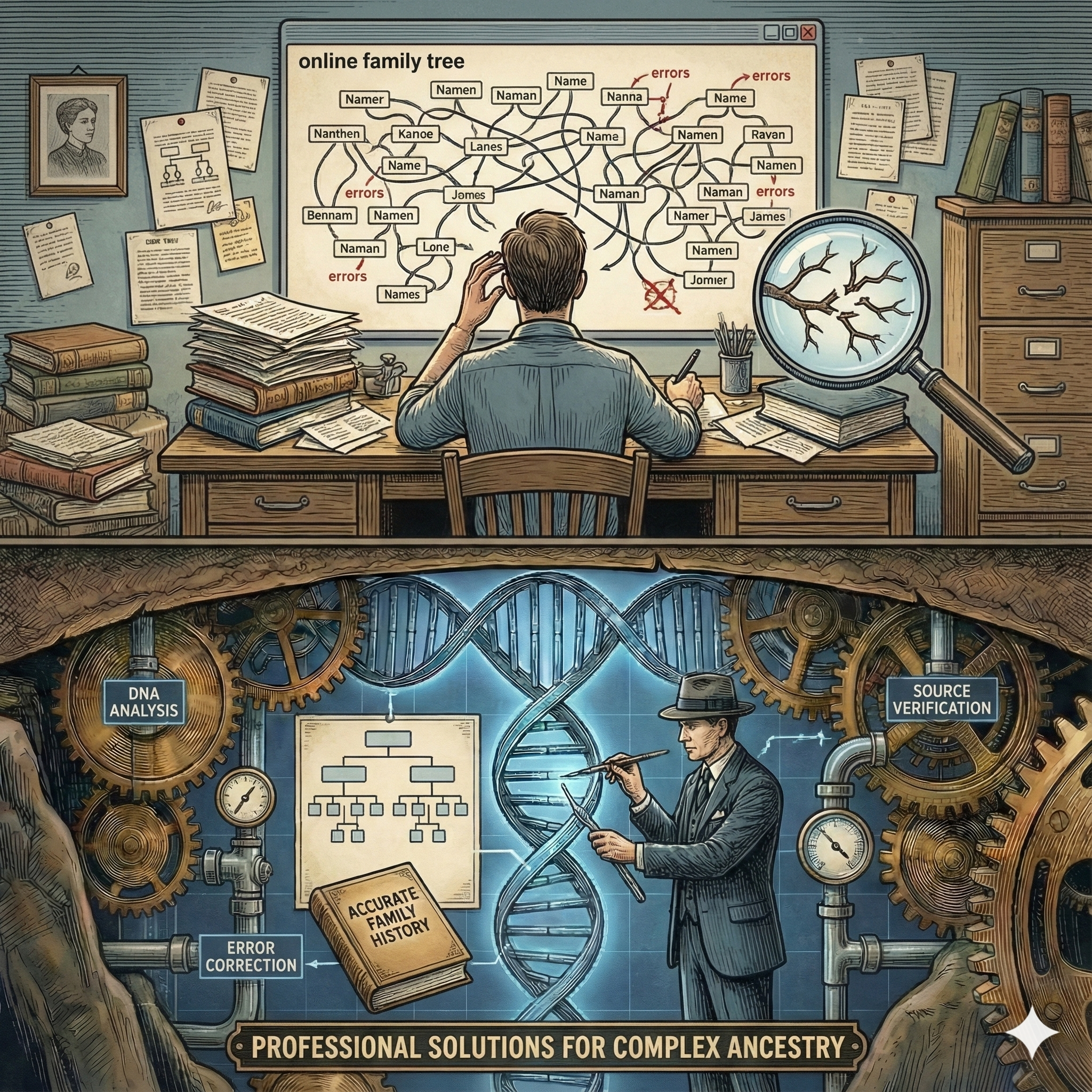
When It Helps to Hire a Professional Genealogist
Genealogy gets difficult when the easy records run out. Duplicate people, incorrect parents, and misread DNA results can quietly derail years of research. This post explains when hiring a professional genealogist makes sense, what common mistakes to watch for, and how expert review can restore clarity and momentum to your family tree.
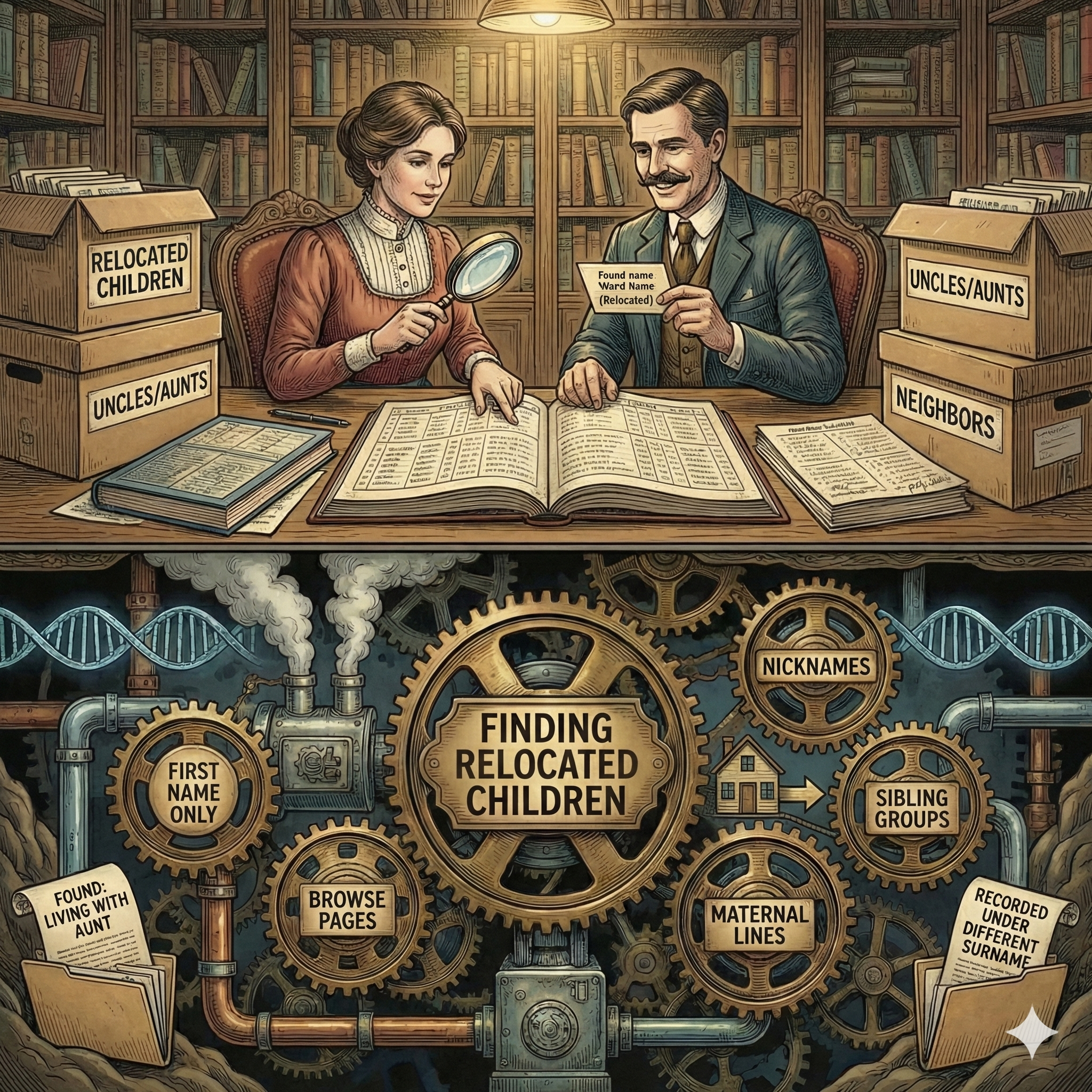
When Children Seem to Vanish from the Census
Missing children in a census record do not always mean a missing family. In earlier records, children often lived with relatives and were listed under different surnames or nicknames. This post shows how understanding historical context and adjusting search methods can reveal children who appear to have disappeared.
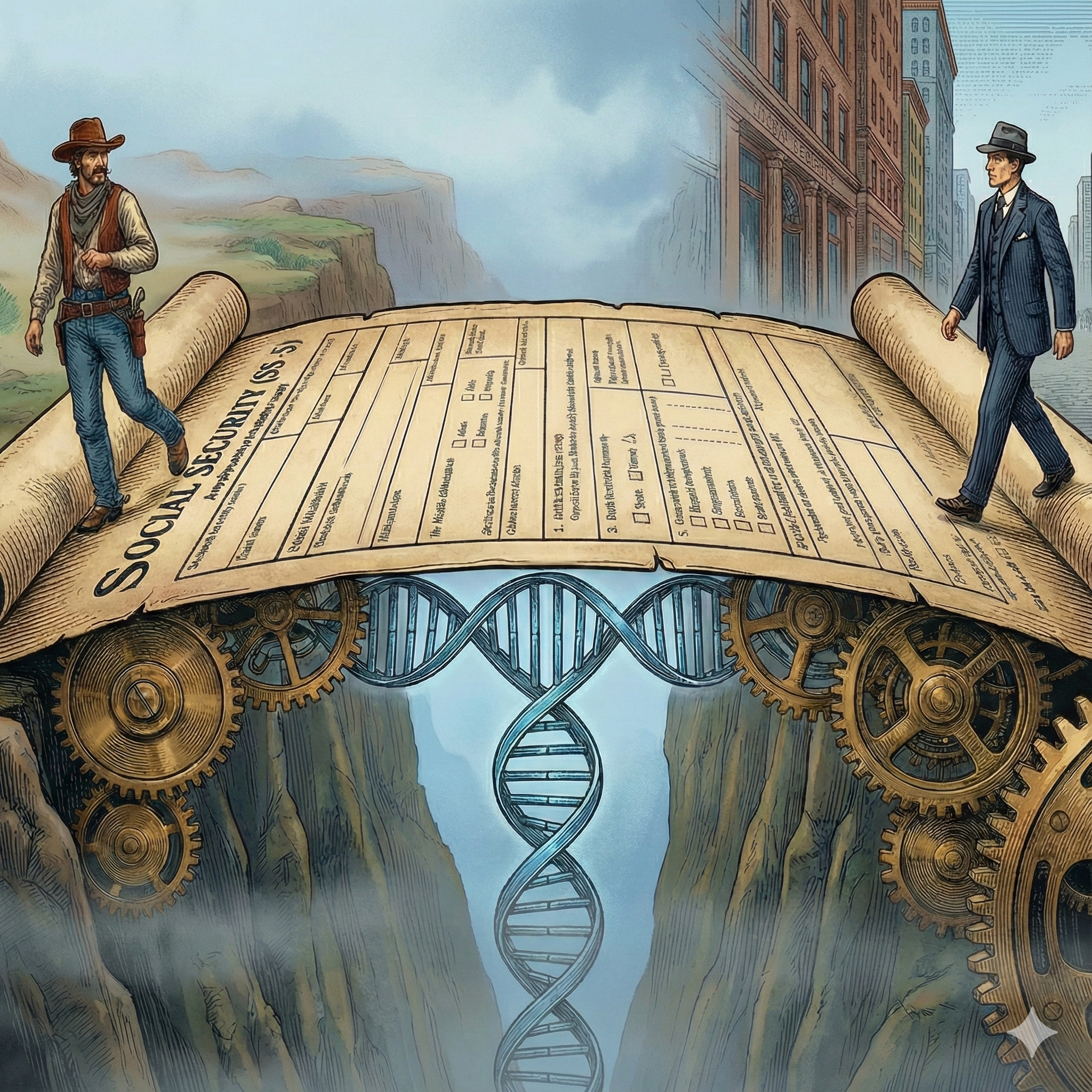
My Go-To Genealogy Trick for Relatives Who “Disappear”
When a relative vanishes from the records, the answer is not always death or distance. Sometimes it is reinvention. This post explains one of my most reliable genealogy techniques for uncovering hidden identities using Social Security SS-5 applications. Through real cases, including an outlaw who rebuilt his life under an alias, I show how small inconsistencies in parent names can reconnect fractured paper trails and reveal the truth behind long-standing family mysteries.
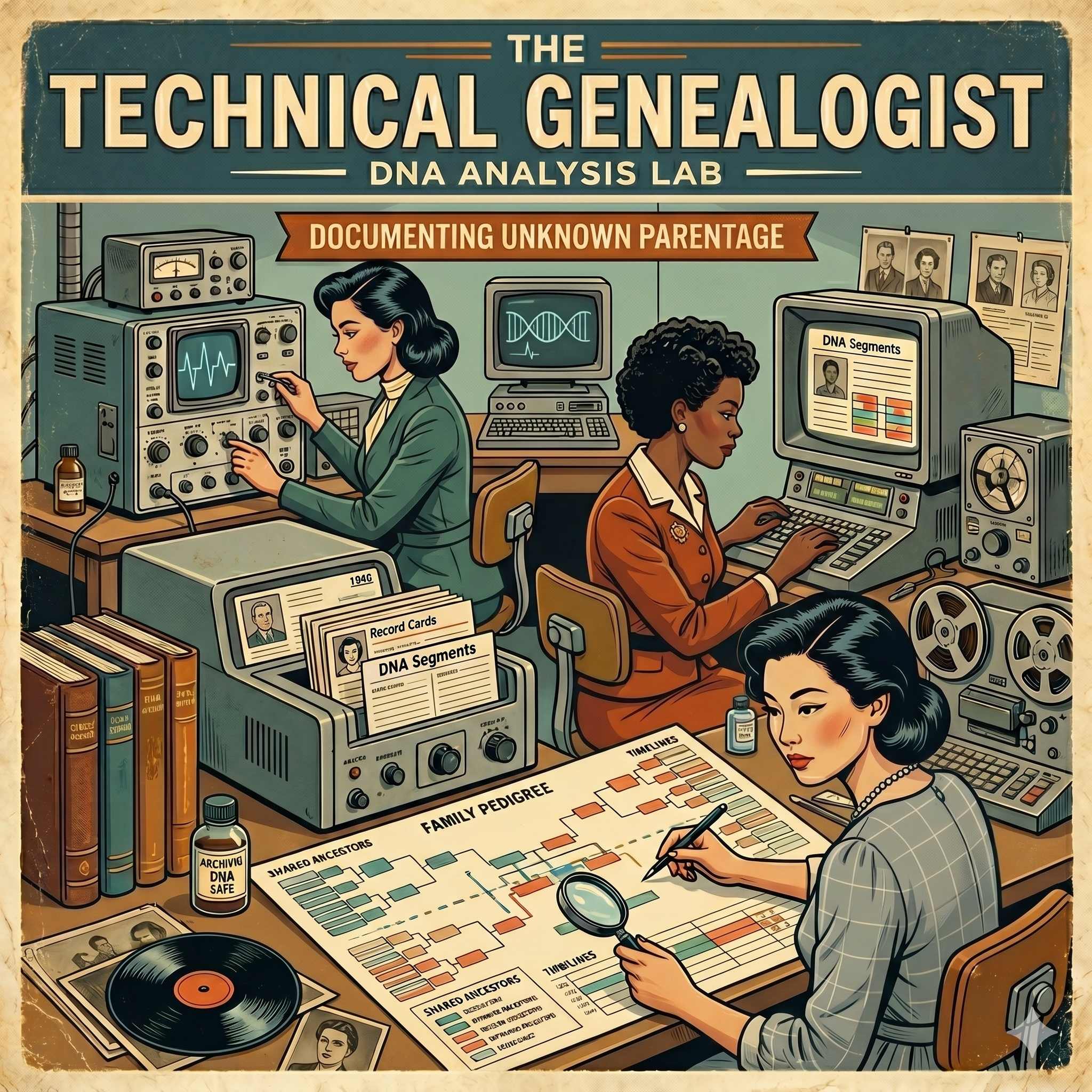
Using DNA Tests to Identify an Unknown Biological Parent
DNA testing has made it possible to answer one of the most difficult questions in family history research: identifying an unknown biological parent. This article explains how DNA evidence, traditional genealogy, and personal context work together to build a well-supported answer. It walks through the process of analyzing DNA matches, separating known and unknown family lines, and using records and timelines to reach clear conclusions.
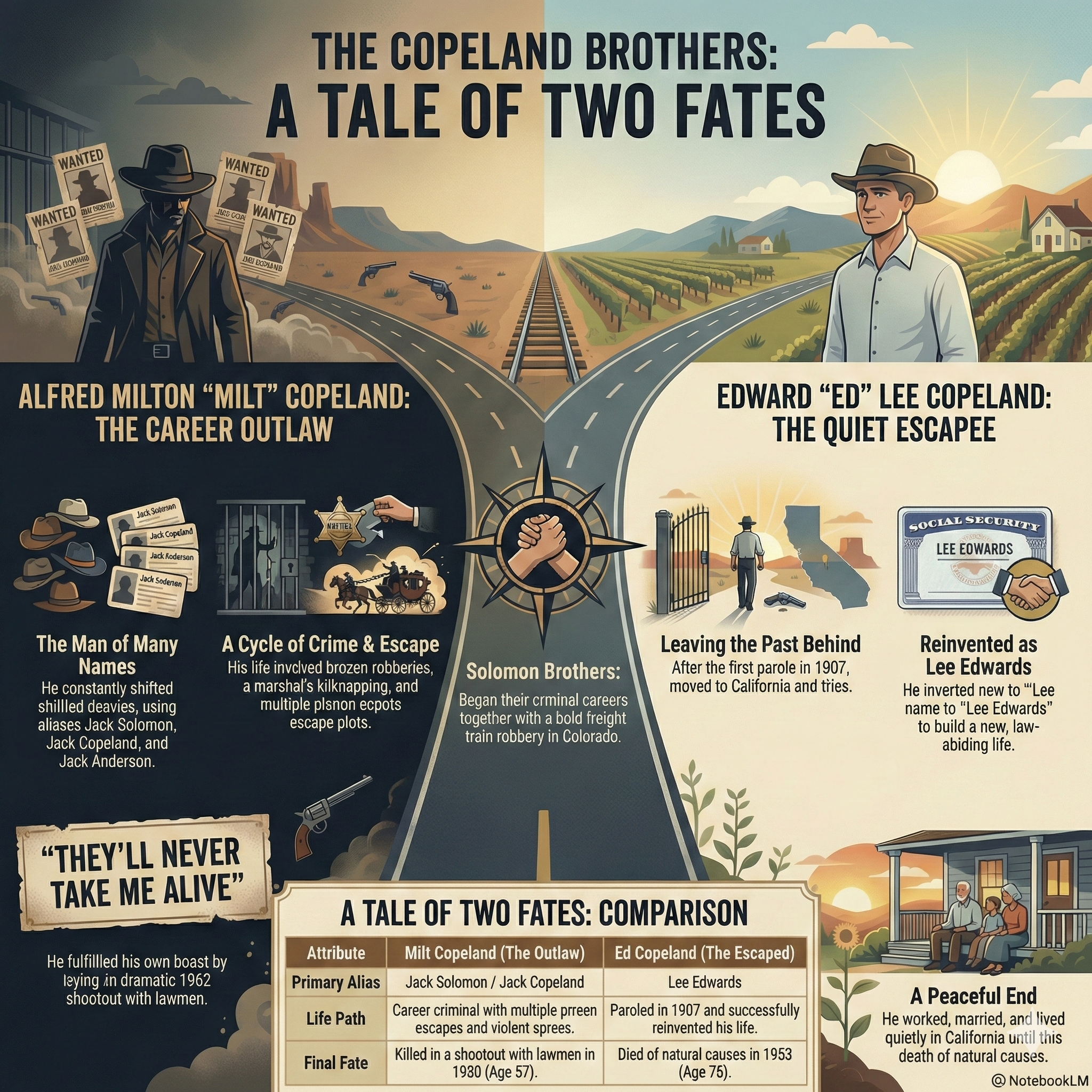
Turning Decades of Research Into a Single Visual: How NotebookLM Helps Genealogists See the Big Picture
What happens when decades of genealogy research are turned into a single visual? This post shows how Google NotebookLM can transform dense source material into clear, meaningful infographics without inventing facts. Using a real family history project as an example, I explain where AI genuinely helps genealogists see patterns, timelines, and connections, while keeping original records at the center of the work.
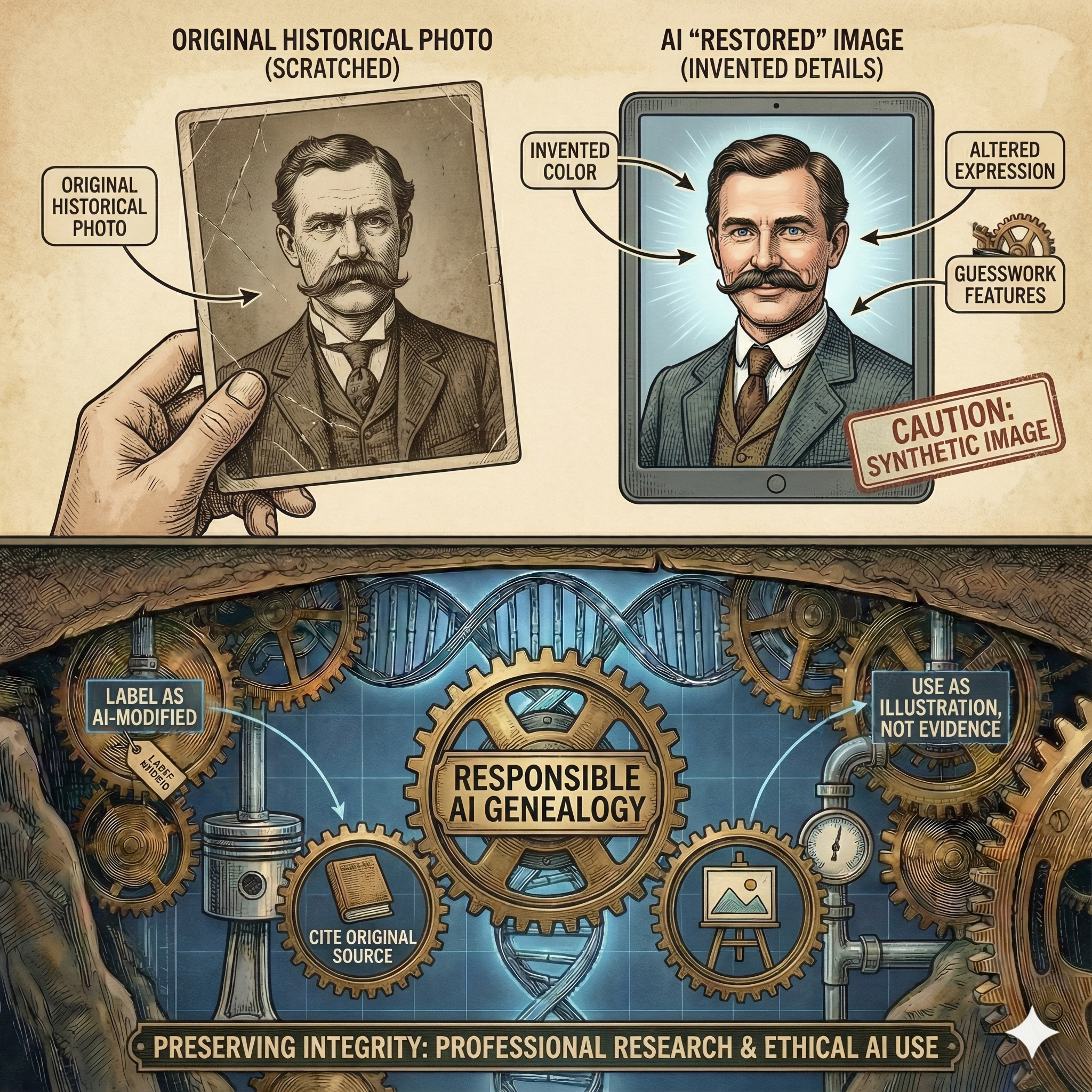
Why Genealogists Should Be Careful With AI Photo “Restoration”
AI photo “restoration” can look convincing, but it does not recover history. It generates new images based on patterns and guesses. In this post, I explain why AI-edited photographs are illustrations, not evidence, how unlabeled images can quietly distort family trees, and what responsible genealogists should do to protect the historical record while still using modern tools.